
Why hamstring injuries remain one of the biggest challenges in modern sports

Hamstring strain injuries (HSIs) are common in sports that require sprinting, acceleration, rapid deceleration, and explosive movements. They occur frequently in football, rugby, American and European football and athletics where athletes regularly face high running speeds and significant mechanical demands.
Despite extensive research and widespread prevention efforts, HSIs remain a persistent issue in elite sports. They account for up to 24% of injuries in European football, 22% in rugby union, and 17% in track and field. Notably, injury rates continue to rise. Recent data indicate that hamstring injury incidence has increased by about 6.7% per year, with the overall injury burden growing by nearly 9% annually.
The impact of hamstring injuries extends beyond missed training. In elite football, these injuries result in competitive context and financial costs. Clubs lose an average of 90 player-days and about 15 matches per season due to hamstring-related absences. Recovery is often prolonged, and returning athletes to play remains difficult. Reinjury is common, with recurrence rates around 18% in elite European football.
Despite major advances in sports medicine over the past two decades, hamstring injuries remain common. Strength training, rehabilitation, load management, and prevention programs are now standard in professional sports. Yet, injury rates remain high across disciplines, indicating that traditional methods have not fully addressed the root causes.
One explanation is that hamstring injuries are more complex than previously thought. They result from the interaction of multiple factors, such as sprinting speed, movement mechanics, muscle loading, fatigue, and the specific demands of various sports.
Hamstring injuries are common among athletes in sports that require speed and explosive movement. High-profile cases include David Beckham’s hamstring strain during the 2002 FIFA World Cup, Kobe Bryant missing games in the 2013 NBA season, and Usain Bolt’s injury in the 2016 Olympic men’s 4×100 m relay. These examples show that hamstring injuries can sideline elite athletes, disrupt major competitions, and impact performance well beyond the initial injury.
Researchers are focusing on how these injuries occur during actual athletic movements and competition. Recent studies have examined hamstring injuries from several perspectives, including sprint biomechanics, match video analysis, injury mechanisms, movement patterns, and MRI findings. Collectively, these studies offer a clearer understanding of why hamstring injuries persist among elite athletes and why prevention remains a major challenge in sports medicine.
Why are hamstring injuries particularly complex?
Hamstring injuries are difficult to prevent because they rarely have a single cause. Unlike many sports injuries that result from a specific impact or movement, hamstring strains usually arise from multiple biomechanical and physiological factors.
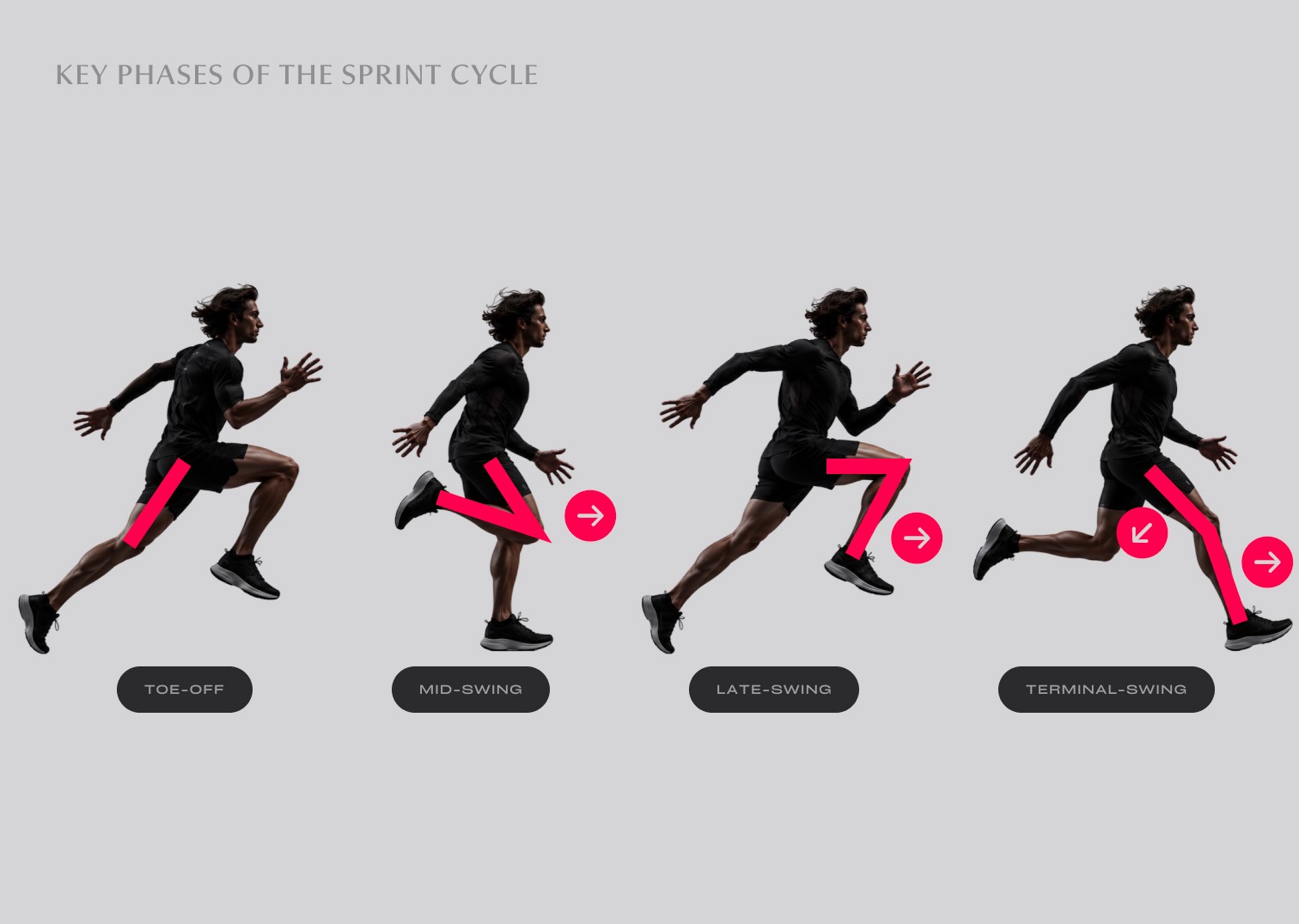
Current models suggest hamstring strains occur when mechanical load exceeds tissue tolerance. This threshold depends on several interacting factors, not a single weakness. Running speed, sprint mechanics, fatigue, injury history, and sport-specific movements all contribute to risk.
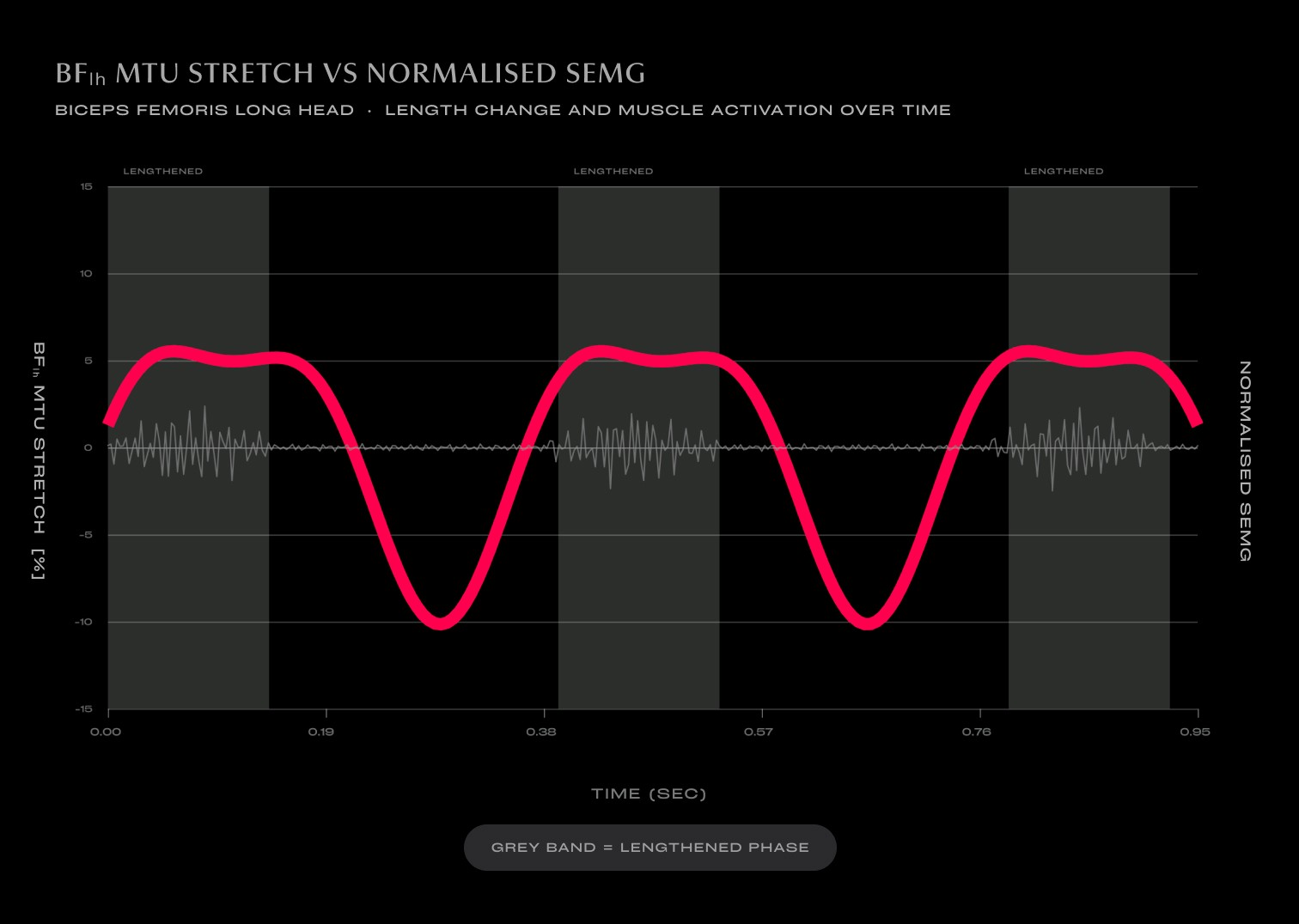
Several additional characteristics make hamstring injuries particularly challenging:
- They occur during high-speed movements. Most injuries happen during sprinting, acceleration, or other explosive actions, where athletes have little chance to compensate for excessive loading.
- Multiple factors interact simultaneously. Biomechanics, fatigue, training load, previous injuries, and movement technique all influence risk, making it difficult to identify a single cause. It is the most common injury mechanism; hamstring strains also occur during kicking, braking, landing, lunging, and rapid changes of direction.
- The same movement may not produce the same outcome. Two athletes performing similar actions under similar conditions may experience completely different outcomes depending on their movement mechanics, tissue capacity, and previous injury history.
Hamstring strain injuries are notable for their high recurrence rate. In the NFL, they represent about 12% of all primary injuries, with 32% being recurrences. These injuries are also common in football, rugby, and track and field, often causing athletes to miss an average of 18 days, though recovery may take longer depending on severity and recurrence.
Why conventional prevention strategies have not solved the problem
Due to the prevalence and cost of hamstring injuries, sports medicine has spent decades seeking effective prevention strategies. Professional clubs now invest significantly in strength training, rehabilitation, load management, and conditioning programs to reduce injury risk.
Some interventions have shown measurable benefits. Eccentric strengthening exercises, such as the Nordic Hamstring Exercise, improve the hamstrings’ tolerance to mechanical strain and can reduce injury rates when used consistently. Advances in rehabilitation and monitoring have also improved return-to-play decisions and athlete care.
Despite these efforts, hamstring injuries remain among the most common in elite sport, and their incidence continues to rise. Current evidence indicates that no single prevention strategy fully addresses the issue.
- Eccentric strengthening (e.g. Nordic Hamstring Exercise). Primary objective: increase the hamstrings’ capacity to tolerate strain. What the research shows: associated with lower injury rates and improved eccentric strength, but should be considered one component of a broader prevention strategy.
- Rehabilitation protocols. Primary objective: restore function and support safe return to play. What the research shows: essential for recovery, although recurrence remains common after returning to sport.
- Load management. Primary objective: control training and match demands. What the research shows: helps manage physical demands, but current evidence suggests that load management alone is unlikely to prevent all hamstring injuries.
- Exposure to high-speed running. Primary objective: prepare athletes for sprint demands encountered in competition. What the research shows: appropriate exposure to high-speed running appears important, while both insufficient and excessive exposure have been associated with increased injury risk.
What video analysis has revealed about injury mechanisms
For many years, research on hamstring injuries centered on clinical examinations, MRI findings, rehabilitation outcomes, and physical risk factors. Although these studies clarified the nature and consequences of hamstring strains, they provided limited insight into the moments just before injury.
This changed with the adoption of systematic video analysis. By reviewing match footage frame by frame, researchers studied actual injury situations in professional and American football, identifying recurring movement patterns and contextual factors linked to hamstring strains.
A key finding from this research is the dominant role of sprinting. Studies from Spain and the NFL show that sprint-related injuries account for the largest proportion of hamstring strains. In professional football, many injuries occur during linear acceleration or high-speed running.
Video analysis also showed that hamstring injuries occur in a range of situations beyond sprinting. Researchers documented injuries during kicking, abrupt braking, lunging, landing, and rapid changes of direction. These actions often subject the hamstrings to significant eccentric loads as athletes control their body position or respond to dynamic game situations.
As more video evidence emerged, it became clear that the traditional distinction between sprint-type and stretch-type injuries does not explain all cases. Several studies identified mixed mechanisms in which sprinting and stretching elements occur together. For example, a player may accelerate while reaching for the ball, change direction at high speed, or combine explosive running with significant muscle lengthening. These scenarios are common in competitive football and illustrate the complexity of real-world injury mechanisms.
Video analysis has also identified recurring biomechanical characteristics. Although injury situations vary between players and sports, many occur during demanding movements involving high running speeds, rapid transitions, and significant loading of the posterior thigh. Hamstring strains often develop when several demanding factors converge within a short timeframe, rather than from a single abnormal position.
These studies have greatly expanded the understanding of hamstring injury mechanisms. Rather than viewing injuries as isolated events caused by a single error or deficiency, researchers now describe them as the result of complex movement situations involving speed, force, coordination, and sport-specific demands. This perspective helps explain why hamstring injuries persist even among highly trained athletes in advanced performance and medical settings.
Common patterns that emerge across studies
Despite examining various sports, leagues, and injury scenarios, the studies reviewed reveal several consistent patterns.
Sprinting is the most common scenario for hamstring injuries. Across studies of elite football players, professional sprinters, and NFL athletes, sprinting consistently appears as the primary context for these injuries. Most occur during acceleration, high-speed running, or maximal sprint efforts. Biomechanical research supports this, showing that sprinting places the hamstrings under some of the highest loads in athletic activity.
The biceps femoris, especially its long head, is injured more often than other hamstring muscles. This pattern appears consistently in studies of both elite sprinters and professional football players. Although the reasons for this vulnerability are still under investigation, the repeated observation suggests the biceps femoris plays a central role in hamstring injury mechanisms.
High-speed actions are a common factor in hamstring injuries. Beyond sprinting, injuries often occur during movements that require athletes to generate or control large forces quickly, such as kicking, braking, lunging, landing, and rapid changes of direction. These actions share the demands of speed, force production, and muscular control, linking hamstring injuries to the most physically demanding moments of competition.
Injury mechanisms are more varied than previously thought. While early descriptions classified hamstring injuries as sprint-type or stretch-type, recent video analyses reveal a broader range of mechanisms. Mixed scenarios involving sprinting, stretching, and directional changes are increasingly reported. This challenges simplistic explanations and underscores the need to examine injuries within their full competitive context.
Similar movement patterns are observed across different sports. Studies in football, American football, and sprint-based sports report comparable biomechanical characteristics. Injuries often occur during high-speed movements that load the posterior thigh and involve rapid transitions between movement phases. Although specific actions vary, the demands on the hamstrings are similar, suggesting some injury mechanisms may be universal across many athletic activities.
Hamstring injuries are not random or limited to a single movement pattern, they typically occur during the most demanding moments of athletic performance, when speed, force, coordination, and movement mechanics converge under competitive conditions.
Why researchers are increasingly focusing on movement biomechanics
For many years, hamstring injury research focused primarily on identifying physical risk factors. Researchers examined muscle strength, flexibility, rehabilitation protocols, training loads, and previous injury history in an effort to understand why some athletes experience hamstring strains while others remain injury-free.
While these factors are important, recent studies indicate they do not fully explain injury occurrence. Researchers are now focusing more on movement biomechanics, including how athletes sprint, accelerate, decelerate, and perform sport-specific actions during competition. Using data on athletes’ biomechanics will help identify injuries more accurately and speed up the recovery process.
- Muscle strength → Movement mechanics. Traditional focus: researchers traditionally focused on whether stronger hamstrings are less likely to be injured. This approach led to the widespread adoption of eccentric strengthening exercises such as the Nordic Hamstring Exercise, which have shown positive results but have not eliminated injuries. Emerging focus: recent studies increasingly examine how athletes move during high-intensity actions, recognizing that the forces acting on the hamstrings depend not only on muscle capacity but also on movement execution.
- Flexibility deficits → Sprinting biomechanics. Traditional focus: earlier research often investigated whether limited flexibility increased injury risk. While flexibility remains relevant, evidence suggests it cannot fully explain why injuries occur in elite athletes. Emerging focus: researchers now pay closer attention to sprint mechanics, since a large proportion of hamstring injuries occur during acceleration, high-speed running, and maximal sprinting.
- Rehabilitation after injury → Identification of injury mechanisms. Traditional focus: much of the literature focused on recovery timelines, return-to-play decisions, and reducing recurrence after injury had already occurred. Emerging focus: video-analysis studies now examine what athletes are actually doing at the moment of injury, helping researchers understand how injuries develop during real competitive situations.
- Physical capacity testing → Analysis of real-game situations. Traditional focus: traditional approaches relied heavily on strength assessments, flexibility tests, and other isolated measures of physical performance. Emerging focus: modern studies increasingly use match footage to investigate injuries in competitive environments, where speed, decision-making, and sport-specific demands interact simultaneously.
- Isolated risk factors → Interaction of multiple factors. Traditional focus: researchers often searched for a single explanation, such as weakness, fatigue, or inadequate flexibility. Emerging focus: current evidence supports a multifactorial view in which injury risk emerges from the interaction of biomechanics, physical capacity, fatigue, running speed, and athletic context.
- Clinical assessment → Video-based movement analysis. Traditional focus: injury research was largely based on examinations, MRI findings, and post-injury evaluations. Emerging focus: systematic video analysis has become an important tool for identifying recurring movement patterns, body positions, and injury scenarios that are difficult to capture through clinical assessment alone.
These developments reflect a broader shift in hamstring injury research. Traditional approaches emphasized athletes’ physical characteristics, while recent studies focus more on the movements and situations that immediately precede injury. This shift has led to a more comprehensive understanding of why hamstring injuries occur and why they are difficult to prevent.
Recent research on sprint biomechanics highlights this shift. A prospective study of 126 elite football players found a significant link between sprint running mechanics and future hamstring injuries. Using the Sprint Mechanics Assessment Score (S-MAS), researchers reported that players with less favorable sprint mechanics were more likely to sustain a hamstring injury. Each one-point increase in the assessment score corresponded to a 33% increase in injury risk.
Importantly, researchers do not claim that biomechanics alone determines injury risk. Hamstring injuries are multifactorial and are influenced by physical conditioning, prior injuries, fatigue, training loads, and sport-specific demands. However, evidence increasingly shows that movement quality is a key factor and may explain why athletes with similar physical profiles have different injury outcomes.
As research evolves, the focus is shifting from isolated measurements to a broader understanding of how athletes move under the demands of competition. This perspective complements traditional injury-prevention approaches and provides an additional framework for addressing one of the most persistent challenges in modern sport.
Key takeaways
Although hamstring injuries have been studied for decades, they remain one of the most persistent challenges in modern sports medicine. The research reviewed in this article points to several important conclusions.
- Hamstring injuries remain extremely common. They account for a significant proportion of injuries in football, rugby, track and field, and other sports that involve sprinting and explosive movements.
- The problem is growing. Despite advances in training, rehabilitation, and injury prevention, the incidence and overall burden of hamstring injuries continue to increase.
- Sprinting is the most common injury scenario. Across multiple studies, high-speed running, acceleration, and maximal sprinting consistently emerged as the situations in which hamstring injuries occur most frequently.
- The biceps femoris is particularly vulnerable. Research repeatedly identifies the long head of the biceps femoris as the muscle most commonly affected by hamstring strains.
- Hamstring injuries are multifactorial. Injury risk appears to result from the interaction of numerous factors, including running speed, biomechanics, fatigue, previous injuries, physical capacity, and sport-specific demands.
- Not all injuries occur in the same way. While sprint-related injuries are the most common, researchers have also documented injuries during kicking, braking, landing, lunging, and rapid changes of direction.
- Video analysis has transformed our understanding of injury mechanisms. By studying real match situations, researchers have identified recurring movement patterns and injury scenarios that were difficult to observe through traditional clinical assessments alone.
- Research is increasingly focused on biomechanics. Recent studies suggest that understanding how athletes move may be just as important as understanding their strength, flexibility, or training load.
Hamstring injuries cannot be explained by a single cause or prevented through a single intervention. Instead, they represent a complex interaction between the athlete, the movement being performed, and the demands of the athletic environment.