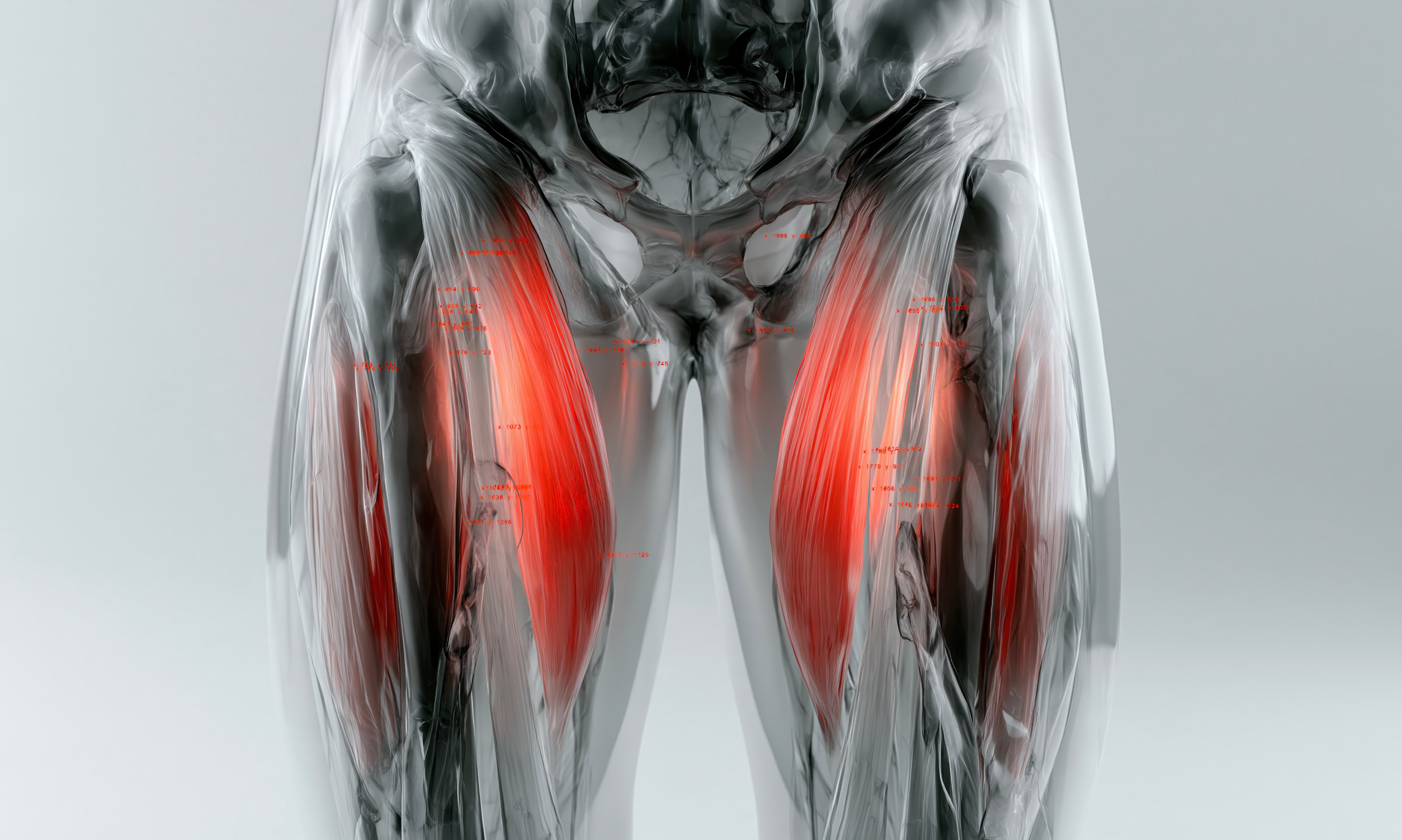
Understanding the hamstrings: why these muscles are so essential (and so vulnerable)

Hamstring injuries are common among athletes in sports that require speed and explosive movement, such as European and American football, sprinting, rugby, and basketball (for example, in professional soccer, they already account for 25% of all injuries). These injuries can sideline athletes for weeks, frequently recur after recovery, and continue to pose significant challenges in sports medicine. But what exactly are the hamstrings?
Although often considered a single muscle, the hamstrings are a group of muscles at the back of the thigh that work together to power demanding movements. Efficient hamstring function is essential for sprinting, jumping, accelerating, changing direction, and powerful kicking. This frequent use has consequences. During high-speed running, the hamstrings endure some of the highest forces in the body. They must generate power while controlling both hip and knee movement, which makes them especially prone to injury.
What are the hamstrings?
The hamstrings consist of three muscles at the back of the thigh: the biceps femoris, semitendinosus, and semimembranosus. This group is essential for running, jumping, and most explosive lower-body movements.
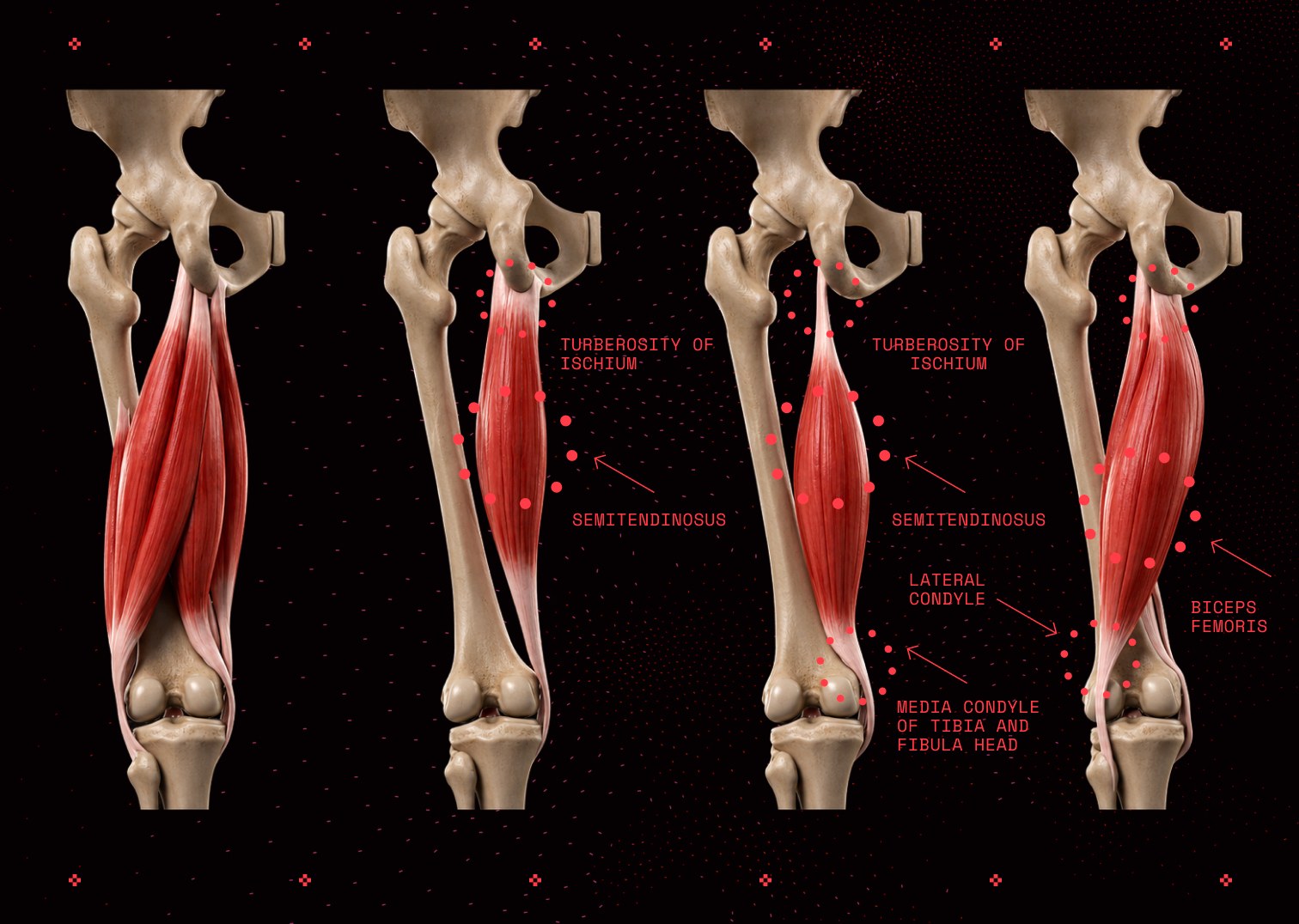
The hamstrings are unique because they cross both the hip and knee joints, allowing them to extend the hip and flex the knee simultaneously. This dual function enables forward movement and leg swing. Few muscle groups coordinate movement across two major joints while generating significant force.
A total of 78 muscles are involved in running. However, not all muscles contribute equally to the primary mechanical work involved in running. After foot strike, the quadriceps take on the main load, simultaneously supporting the body and controlling deceleration. Then the lead shifts to the lower leg muscles—primarily the soleus and gastrocnemius—which provide the main propulsion and once again support body weight. The gluteal muscles help stabilize the pelvis and support the body at the beginning of the stance phase, while the hamstrings and hip flexors are more heavily involved in coordinating the transition of the leg into the swing phase. Even the arm muscles are involved in running—but they account for less than 1% of the total effort.
While the three muscles function together, they differ in structure and injury risk. The biceps femoris, located on the outer back of the thigh, is most often injured in athletes, accounting for 57% to 87% of all hamstring strain injuries. The semitendinosus and semimembranosus, found on the inner side, also support movement and stability but are less frequently injured. Researchers believe the biceps femoris’s anatomy and the forces it experiences during sprinting contribute to its vulnerability.
The hamstrings are active throughout athletic performance, producing force and coordinating hip and knee movement during acceleration, sprinting, jumping, landing, and sudden changes in direction. This combination of anatomy and function makes them essential for performance and prone to injury.
Why are the hamstrings so important?
The hamstrings play an important role in nearly all powerful lower-body movements. They are active during sprinting, jumping, accelerating, and changing direction in athletic activities. Their importance lies in the wide range of functions they perform:
- Generating speed: The hamstrings extend the hip and propel the body forward during walking, running, and especially sprinting.
- Controlling the leg during each stride: They flex the knee and coordinate the leg’s movement as it swings forward and prepares for ground contact.
- Supporting explosive movements: Efficient hamstring function is essential for sprinting, jumping, kicking, accelerating, and rapid changes of direction.
- Absorbing and controlling force: The hamstrings not only generate power but also slow the leg and stabilize movement during landing, braking, and deceleration.
- Working with other muscle groups: The hamstrings coordinate with the glutes, quadriceps, calves, and core to maintain balance, stability, and efficient movement.
Because the hamstrings serve multiple roles, they experience constant stress during training and competition. Each sprint, acceleration, landing, and change of direction adds another cycle of loading.
Why are the hamstrings so prone to injury?
While hamstrings generate power and control movement, they function under demanding conditions. Research indicates their high injury rate results from a combination of anatomical, biomechanical, and sporting factors.
- They cross two major joints. The hamstrings control both hip extension and knee flexion at the same time, making their role more complex than that of many other muscles.
- They experience extremely high forces during sprinting. As running speed increases, the forces acting on the hamstrings rise dramatically, especially during maximal sprinting.
- They generate force while being stretched. During sprinting, the hamstrings lengthen while remaining highly active—a demanding combination that places considerable stress on the muscle-tendon unit.
- Peak loading occurs in a very short period of time. During the late-swing and terminal-swing phases of running, the hamstrings rapidly slow the swinging leg before foot contact, when muscle activation, force, and length all peak together.
- They repeat these demanding movements hundreds of times. Every sprint, acceleration, landing, and change of direction adds another loading cycle. As fatigue builds, the muscles become less able to tolerate these repeated stresses.
Why is the biceps femoris injured more often than the other hamstring muscles?
While the hamstrings function as a group, injuries are not evenly distributed among the three muscles. Studies show the long head of the biceps femoris is injured more frequently than the semitendinosus or semimembranosus, making it the most commonly strained hamstring muscle in professional athletes.
Researchers attribute this to several interacting factors:
- Unique anatomy: The biceps femoris has a distinct structure and attachment pattern, which may subject it to greater mechanical stress during movement.
- Role during sprinting: As running speed increases, the biceps femoris is heavily involved in controlling hip extension and knee movement, resulting in particularly high loads.
- Peak loading during sprinting: The biceps femoris reaches peak activation and muscle-tendon length during the late-swing phase, which is most often associated with hamstring injuries.
- Repeated high-speed running: Athletes in sprint-based sports repeatedly load the biceps femoris during training and competition, increasing cumulative stress on the muscle.
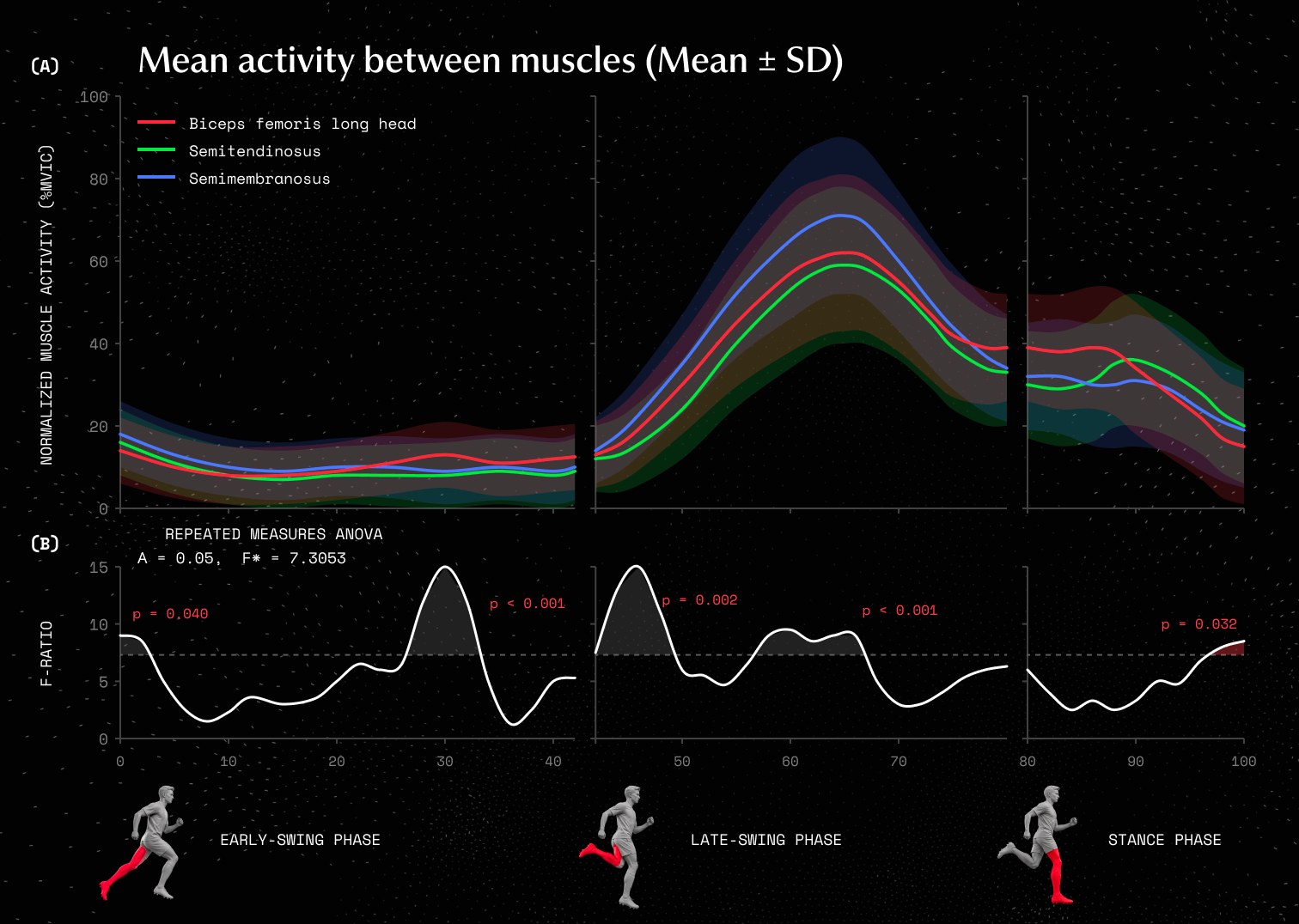
Researchers note there is no single explanation for the biceps femoris’ increased vulnerability. Current evidence suggests its high injury rate results from the combined effects of anatomy, movement mechanics, and the physical demands of sprinting. Determining the precise reasons for its higher injury rate remains an active area of research.
Why aren’t all hamstring injuries the same?
Injuries can affect different parts of the hamstring muscle group, and even the same muscle may be injured in various ways. For example, damage may occur in the muscle belly, the muscle-tendon junction, or the tendon. Each type requires specific treatment and rehabilitation approaches.
Research shows that hamstring injuries result from different movement patterns. Video analysis has identified several common mechanisms:
- Sprint-type injuries typically occur during high-speed running.
- Stretch-type injuries develop when the hamstrings are placed under extreme stretch during movements such as kicking or lunging.
- Mixed-type injuries involve sprinting, stretching, and rapid changes of direction. Recent studies suggest these mixed mechanisms may be more common than previously recognized.
The injury’s location also affects recovery. Some athletes return to sport within weeks, while others need extended rehabilitation, even if initial symptoms are similar.
Due to this variation, medical teams do not rely on symptoms alone. Clinical examination is typically combined with imaging, such as MRI, to identify the injured muscle, the location of damage, and its severity.
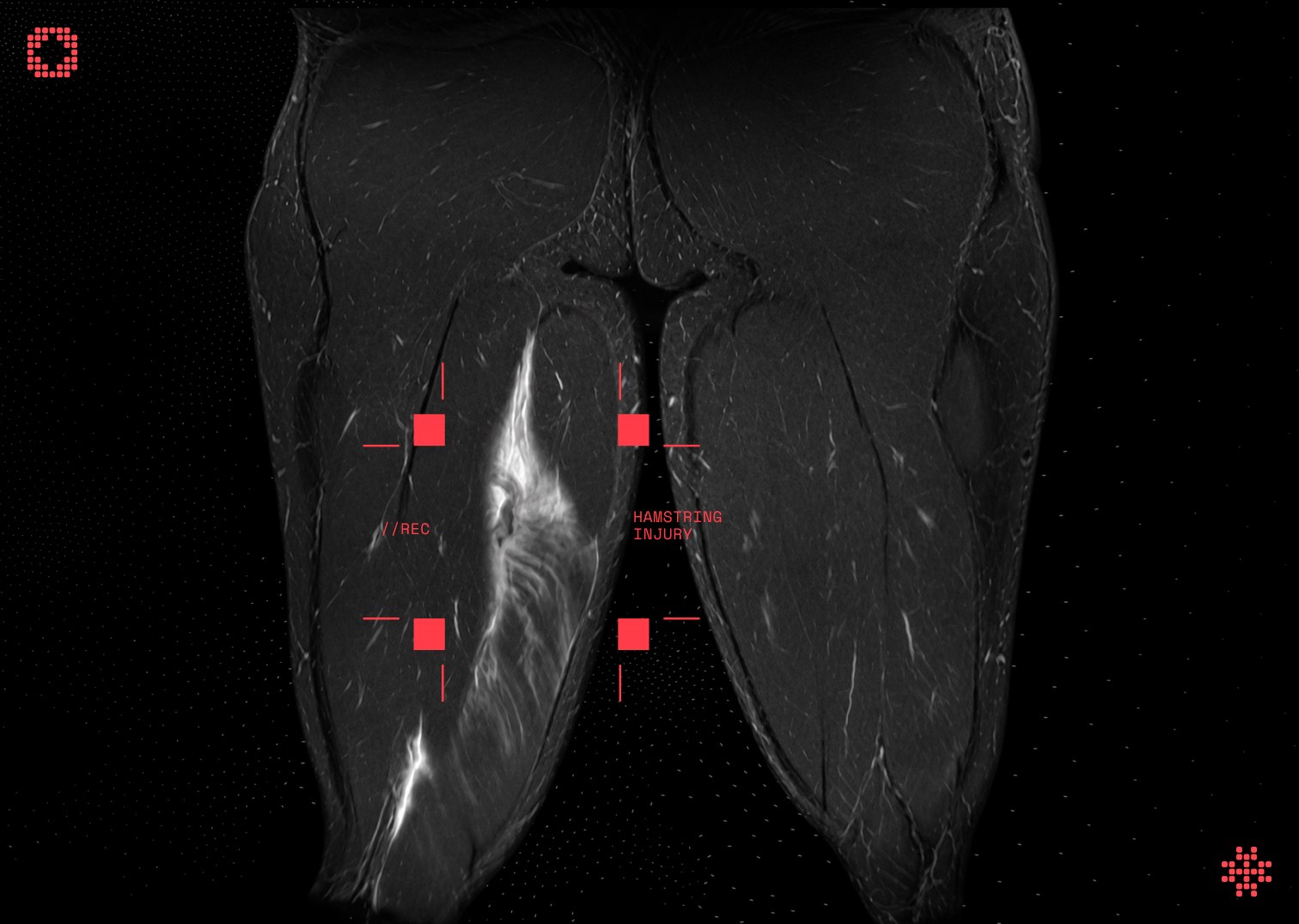
So, there is no single “hamstring injury.” The same diagnosis can refer to a range of conditions with different causes, recovery times, and rehabilitation needs. Recognizing these differences is essential for choosing the right treatment and reducing the risk of future injury.