
Revolutionizing tennis with AI and computer vision

AI-based analytics are increasingly changing the way professional athletes train and perform across a variety of sports, including tennis. Growing influence of AI in the sports industry has led to significant advancements in training methods and analytics, providing invaluable insights for athletes and coaches alike. Here, we break down the key benefits and applications of AI and Computer Vision in tennis.
Ball movement analysis: trajectory, speed, and impact
The foundation of AI-based analytics in tennis lies in the analysis of ball movement. AI algorithms can track the ball's trajectory, speed, and even the exact moments when it hits the racket or the court. These insights allow athletes to refine their techniques and keep track of important details. The resulting visualizations such as the color-coded trajectory of the ball can ultimately lead to improved performance.
Player movement analysis: perfecting techniques with 3D models
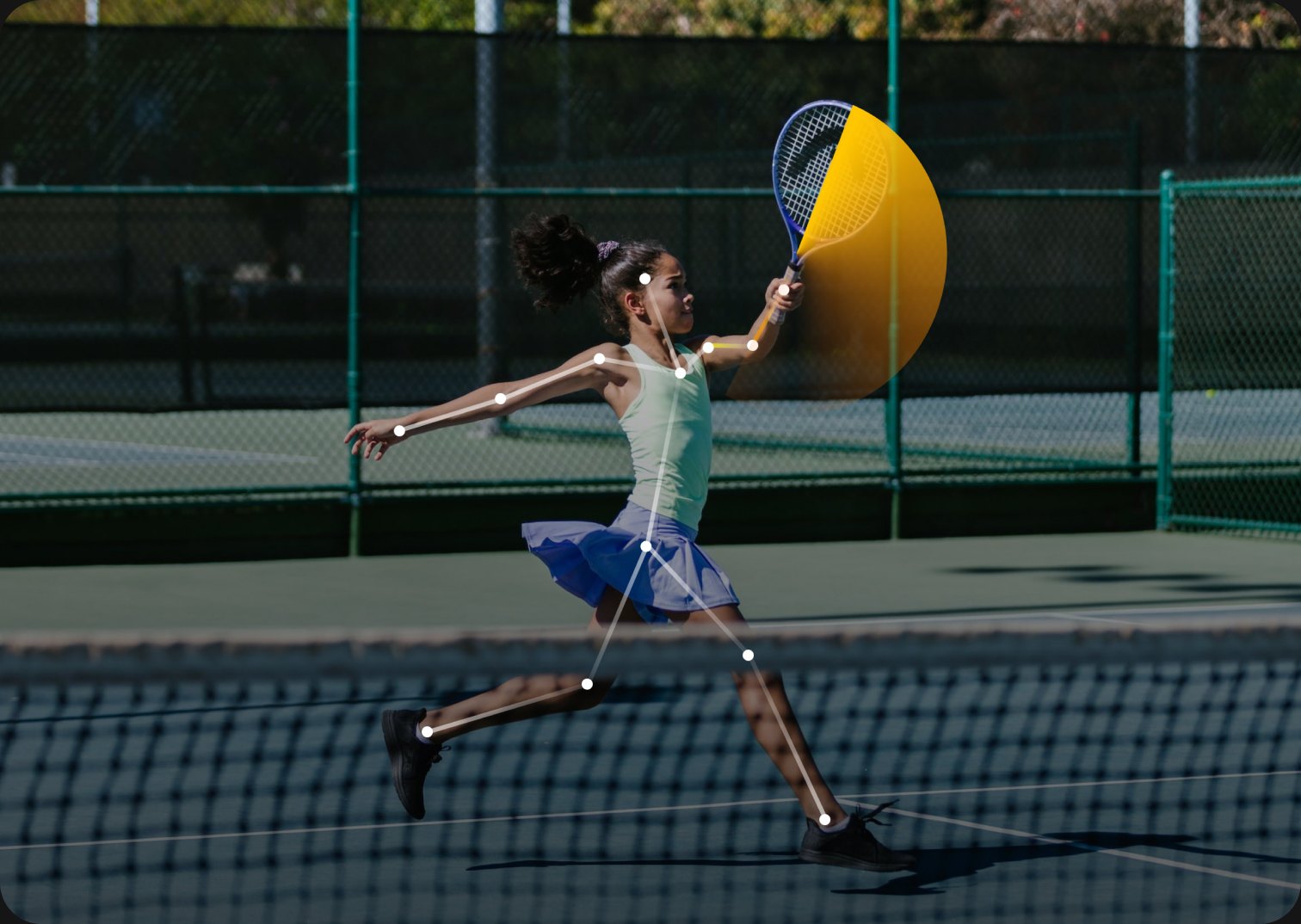
Another crucial aspect of AI and computer vision in tennis is the analysis of player movement. By using multiple calibrated cameras positioned around the court, it is possible to capture different angles of the athlete during training.
This data is then used to estimate 3D keypoints on the player's body (such as shoulders, elbows, wrists, and head position), creating a 3D model that provides valuable insights into their unique playing style and areas for improvement.
These analytics enable athletes and coaches to review videos and 3D skeletons based on the collected data, ultimately leading to more efficient training and better performance on the court.
Court geometry analysis: understanding the playing field

Analyzing the court's geometry is another essential component of AI and computer vision in tennis. Detecting the court's lines and boundaries, as well as any restricted areas, gives a better understanding of the playing field and helps athletes refine their strategies.
When combined with ball and player movement analysis, this comprehensive understanding of the game's dynamics allows for more effective decision-making and training improvements.
The future of tennis training: harnessing AI and computer vision

The integration of AI and Computer Vision in tennis training has already proven to be a game-changer. By providing detailed insights into ball movement, player positioning, and court geometry, advanced analytics are changing the way athletes train and compete. As AI technology continues to advance, we can expect even greater innovations in sports analytics, pushing the boundaries of human potential and transforming the athletic landscape for generations to come.
Computer vision has already replaced line judges at most of the sport’s top level: electronic line calling has been used at every ATP Tour event since 2025, at the Australian Open and US Open since 2021, and at Wimbledon since 2025. Roland-Garros is the only Grand Slam still using human line judges. Coaches now use artificial intelligence to spot patterns that humans cannot see. AI is capable of quickly layering data to detect areas of significance. AI also accelerates media coverage of tennis tournaments, creating video content in seconds and making match highlights and smart playlists available to fans almost immediately after a match.