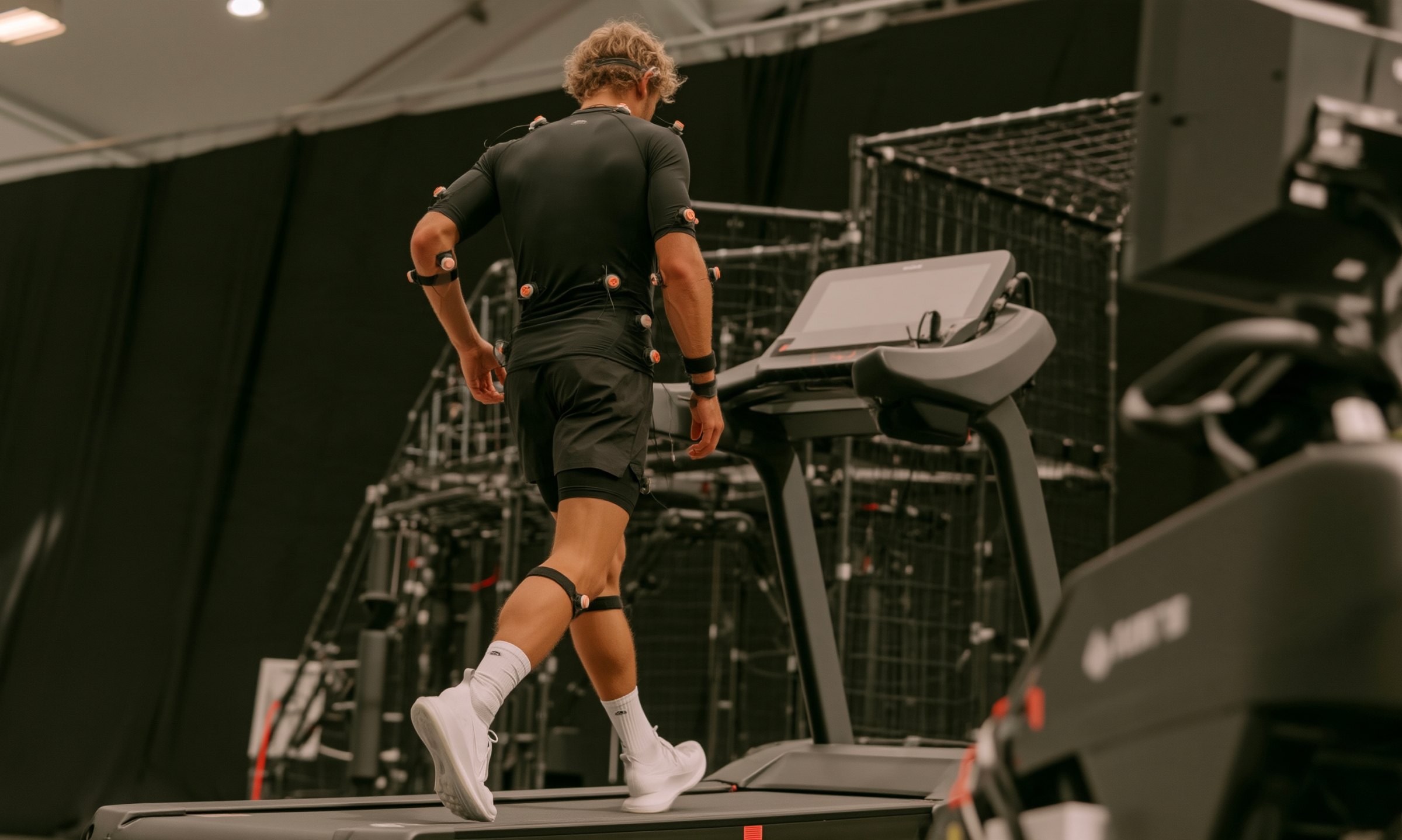
“Technology Doesn’t Replace Expertise, It Amplifies It!”

Rush James "R. J." Archer II is a former professional American football player who spent five seasons playing across the NFL, CFL and Arena Football after his college career. Since retiring from professional sports, he has worked for more than 11 years across sports technology and medical devices, including roles at Catapult and in orthopedic medical devices, giving him a unique perspective on performance technology from both the athlete’s and the industry’s side.

You’ve seen performance technology from both sides—as an athlete and later from the product side. How has your perspective changed?
RJ Archer: When I was an athlete, we didn’t have nearly as much technology or collect as much data as teams do today. You might not understand all the science behind it, but you quickly get a feel for what actually helps you. Does it help me train better? Does it help me perform better? Does it help me recover quicker? Athletes are usually pretty good at telling the difference between meaningful insights and tasks they’re simply being asked to do because everyone else is doing them.
Working in sports technology has given me a much deeper appreciation for the data that’s being collected and, more importantly, how practitioners actually use it. The best technology isn’t just accurate and reliable—it also has to fit into the workflow of the organization. As an athlete, you think you’re busy. Then you work with practitioners and realize how much they’re juggling every day: supporting athletes, communicating with coaches and coordinating across the organization.
Seeing both sides has given me a much greater appreciation for the work performance staff do and for the challenge of making technology genuinely useful in elite sport.
So, how has your background as an athlete helped you understand the role of performance technology today?
RJ Archer: It helps because you understand the environment. You know what training facilities, locker rooms and day-to-day workflows look like. You understand the rhythm of a season, whether it’s game weeks, the offseason or rehabilitation.

That experience has helped me relate much better to both athletes and performance staff. Even if it’s a different sport, you’ve been in similar environments and understand what they’re dealing with on a daily basis. It gives you a deeper appreciation of what both the athletes and the staff do, and I think that relatability has been valuable throughout my career.
Were there moments when, as an athlete, you felt you understood performance processes better than the practitioners applying them?
RJ Archer: I don’t think so. The practitioners at that level are incredibly good at what they do. What makes the best of them special is that they understand the technical, medical and performance side, but they also know how to relate it to the athletes.
As an athlete, you think you understand why certain data is being collected—whether it’s to help manage injury risk, monitor sleep or improve performance.
But once you see it from the other side, you realize just how much is happening behind the scenes and how much balance practitioners have to strike.
They don’t just understand the data. They also know how to explain it in a way that’s relevant to athletes—does it help me perform better, recover better or stay healthy? I never felt I understood those processes better than the staff did. If anything, working on the other side gave me even more appreciation for what they do.
Where do you see the biggest communication gaps between athletes, practitioners and technology providers?
RJ Archer: I think organizations that use technology well usually have a clear plan for how they’re going to roll it out and communicate it to their athletes.
Where communication can break down is that everyone looks at the same technology from a different perspective. Technology companies know their products inside out. Practitioners understand both the technology and the medical or performance context. Athletes are much more practical—they just want to know: How is this helping me?
That’s why good performance staff is so important. They create a clear pathway for how technology is used and how information is communicated—not just to coaches or other departments, but to the athletes themselves.
Without athlete buy-in, especially when a technology requires players to go through testing or screening, it’s very difficult to get meaningful results. If athletes don’t understand the value or aren’t fully engaged, even great technology loses much of its value.
Indeed. But modern performance technology often requires athletes to wear sensors or regularly provide data. How do athletes actually feel about that?
RJ Archer: I think it depends on how intrusive it is. If it’s just part of the normal routine, athletes get used to it. But from an athlete’s perspective, the ideal technology is something that provides valuable insights without taking extra time or effort. Elite performance environments are incredibly busy, so every additional test or screening has to justify itself.
If athletes can see that something is genuinely helping them perform better, recover faster or stay healthier, they’re much more willing to buy into it. Otherwise, it just becomes another task.
I remember wearing a watch that tracked sleep and time off my feet. That was easy—it happened in the background. But every morning we also had to complete an RPE questionnaire about how we were feeling.
Looking back, I’m sure there were days when I answered without really thinking. There were so many other things on my mind—meetings, the playbook, training—that I probably gave the same answer over and over.
That’s a good example of how even something with a very low barrier to entry depends on athlete engagement. If athletes don’t understand what the information is being used for, they’re less likely to provide thoughtful, consistent input.

Do you think athletes are experiencing some fatigue from the growing number of performance technologies?
RJ Archer: I think sports technology has exploded over the last ten years, and it will probably continue to do so. But there’s definitely a tipping point where athletes are simply being pulled in too many directions. They’re already thinking about training, meetings, travel, family and everything else that comes with elite sport.
That’s why the technologies that succeed are usually the ones that are easy to use and fit naturally into the existing workflow. Ideally, they make use of information that’s already being collected rather than asking athletes to do even more.
From what I’ve seen, practitioners think about this a lot. They’ll often point to a technology and say, “This is really valuable, but it takes ten minutes per athlete.” They might want to use it every day, but realistically they don’t have the time, and the athletes won’t commit to it.
There’s definitely a balancing act. Technology can be excellent, but if it’s too demanding for either the staff or the athletes, it’s very difficult to implement successfully.
At the same time, athletes want to know how the information is being used. Is it there to help keep me healthy and improve my performance, or could it affect my next contract?
That’s why there has to be a clear vision of how the technology benefits the athlete—not just today, but over the course of their career. Otherwise, the best solution is one that’s almost invisible, using information that’s already being collected. That saves time for both the athletes and the practitioners while still providing valuable insights.
Do performance metrics play a role in an athlete’s market value or contract negotiations?
RJ Archer: I don’t know exactly how much of that information is used once it reaches the front office. I imagine any data that’s collected could potentially be part of the picture, but I don’t know to what extent. One thing that probably matters is injury risk. If a club is investing millions of dollars in a player, it wants to know that they’re going to stay available and perform.
That’s also why athletes often ask how their data is being used. Is it there to help them stay healthy, or could it potentially be used against them? That’s always going to be part of the conversation.
What do the most forward-thinking organizations do differently when it comes to performance data and technology?
RJ Archer: I think the most forward-thinking organizations have a clear plan and a clear methodology. They have a “why” behind what they’re doing.
When they commit to a new technology, they’ve usually spent time evaluating it and understanding exactly how they’re going to use it. They know where it fits into their process, whether it’s during the season or the offseason, and they have buy-in from the whole staff—not just the people who approved the purchase, but the people who’ll be using it every day.
The best organizations don’t adopt technology for the sake of it. They add tools that complement their existing framework and help them make better decisions.
I’ve never believed that technology should replace people. There’s too much nuance in sport—knowing your athletes, understanding training loads, travel demands and everything else that affects performance. Good technology simply gives good decision-makers better information. It’s another objective voice in the room that helps create more informed conversations.
The organizations that are truly forward-thinking aren’t afraid to adopt new technology—as long as it fits their philosophy and the way they already work.
Where do you think performance technology is heading over the next five years?
RJ Archer: I think technology is going to become much easier to use. Performance staffs are always trying to get time back, while seasons keep getting longer, travel becomes more demanding and there are more games than ever. The easier a technology is to use, the more valuable it becomes.
I also think everything will become more individualized. Teams already understand group trends, but the next step is tailoring decisions to each individual athlete.
The third trend is that technology will become more passive. Instead of asking athletes to do more, we’ll increasingly rely on data that’s already being collected and find better ways to add context and extract insights from it.