
“To get energy, you need to spend energy”
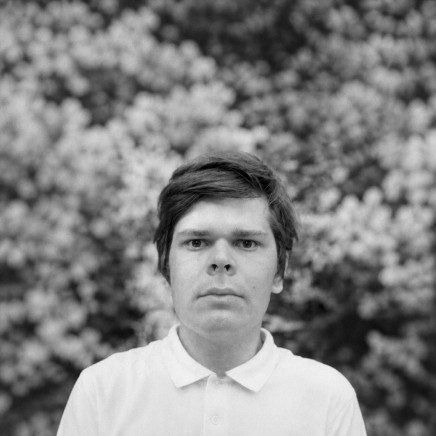
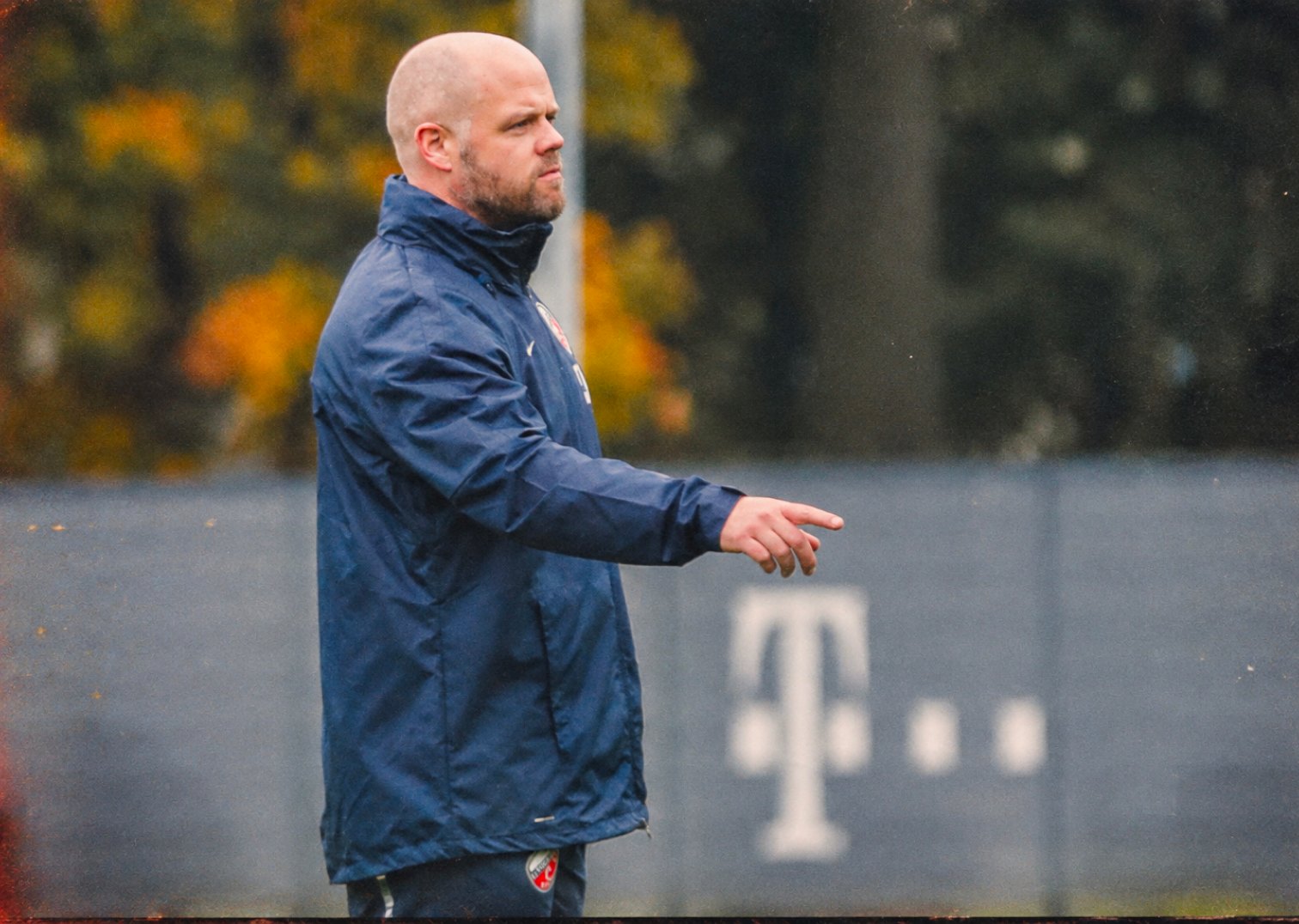
Jeroen Peters (JP) has spent nearly two decades working in elite football. Trained as a physiotherapist, he moved into strength and conditioning before going on to lead performance departments at clubs including FC Utrecht and Club Brugge, with Ajax and Watford along the way.

We spoke with JP about why performance starts with human connection, how to make invisible injury-prevention work visible, how small interactions shape a team’s culture—and what two decades of helping other people reach peak performance can cost you personally.
Before we get anywhere near football, I heard that your early-morning training habits once got you stopped by the police. What happened?
JP: Funny story. It actually happened twice—once with a security company and once with the police.
I like to be a morning person. I like to win the day before it starts. So a couple of times per week, I would go out very early with a weight vest. The problem was that the vest looked like something the special forces would use, with ammo and stuff. And because it didn’t fit under my jacket, I had to wear it on top.
I live in an area with a lot of embassies, police and private security. One morning, a security guy drove up to me and asked, “Who are you? What’s up with the vest?” I said, “It’s just a weight vest. There’s a brand here on the front.” And he said, “You can’t see that in the dark. It looks scary.”
So I asked my oldest daughter to put some colorful patches on it—a few pink ones and a banana—so it looked less scary.
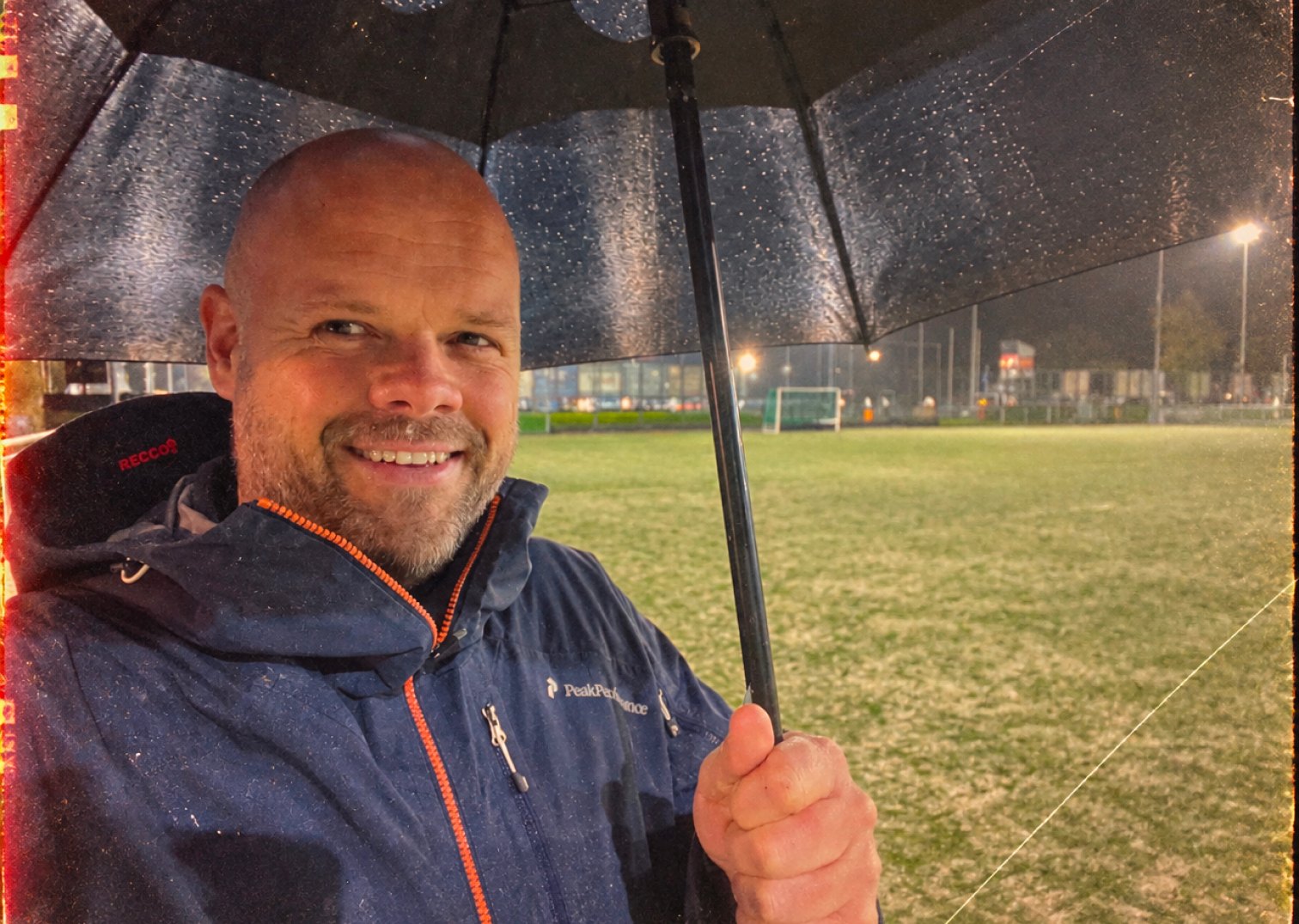
A couple of weeks later, the police stopped me again. I saw their brake lights come on and thought, “No, here we go again.” I immediately walked up to them and said, “I’m sorry, I live in this area. I’m just trying to do my best to stay fit early in the morning and win the day.” They were like, “It’s a funny sight, buddy, seeing you walking around in a weight vest when it’s pitch black. What are you up to?” And I said, “Just living here. Just winning the day.” They let me go. It never happened again, so maybe they know who I am now.
You’ve spent 20 years surrounded by GPS, load charts and performance data. Yet you say that performance starts with connection. What happens when the numbers tell you one thing, but the player tells you something completely different?
JP: We’ve had that multiple times. A player can feel super fresh, but the numbers tell you the opposite. Or the other way around: a player feels like shit and the numbers tell you he’s fresh as a daisy.
So what do you do? You talk to the human first instead of talking to the football player. Because if you ask a player, “Do you want to play?” I’ve not had the moment where they said no. First they say yes, of course.
Context is king. I trust the numbers, and I always trust numbers, but I don’t trust them if I don’t get the context from the player or his environment. They have to align. They have to strengthen each other.
You need to know the player really well—his background, his history, his default mode. There are players who are always scared of running into an injury, and there are players who don’t care about an injury: they just want to win every training session and every game. I put that context on top of the numbers. Sometimes we would take the name off a GPS profile and ask each other to guess who the player was. Nine times out of ten, we were correct. But sometimes you’d look at it and think, “Really? A central defender? Holy shit, that’s a lot of high-speed meters.” Then you watch the game and see what actually happened.
So you have to talk to the athlete, watch the footage and look at the report. Then it becomes a story. For me, that’s what “performance starts with connection” means. It’s a human connection. First and foremost, you have to get to know the human being before you can analyze the athlete and before you can talk to the football player.
So much of injury prevention is invisible. When it works, nothing happens and nobody claps. How do you prove the value of work whose best result is a non-event?
JP: I do believe I’ve gotten better at that over the years, because you do it together with a team and you create a narrative around no injuries and no events happening. You have to create a story around that.
Basically, you’re selling your proposition as a team to whoever needs to hear it—the sporting director, the board, the players, the coaching staff. You have to show that the philosophy you and the team have constructed is working. And in the end, you have to show numbers, because everyone wants to see a report. They like your blue eyes, they like your smile and they like your story, but they still want some proof. And that’s okay.
The frustrating thing is that one game can change the whole narrative. You can go four months without any injuries, everyone is available and everyone is happy. Then you have one big ACL rupture and suddenly it’s, “We’re not fit. We’re super injury-prone.” And you’re thinking, “Wow, we just had four months without any injuries. Everyone was available.”
So you have to become some sort of salesperson and storyteller for yourself and for the medical and performance staff.
It’s also about celebrating the small wins. Usually, we focus on the stuff that’s not going well. Sometimes you have to detach yourself from the day-to-day, hover above it and say, “Hey, this was actually a great week.” Then you bring that back to the people doing the day-to-day grind seven days a week. A clap on the shoulder, a high five—those small moments matter big time.
You talk a lot about seeing an athlete as a whole person, rather than a set of data inputs and outputs. Was that always your approach, or did particular players teach you that?
JP: There are actually a few players who helped me along the way and taught me that human connection matters most—for them and for me. Earlier in my career, you tend to go in like this: you really want to chase that win or chase that extra day off an injury return-to-play. But when I say “performance starts with connection,” you really have to understand the other side of the team.
Some players coming back from injury don’t want to speed up. They just want to do their rehab really, really well and be damn sure that when they return to play, it’s play and performance at the same time. Some players don’t care about performance—they just want to play. They’ll catch up while they’re playing.
So it starts with connection. Understand your teammate. And your teammate is the player.
There are a few players who taught me greatly about that. At every club, I had one or two who, directly or indirectly, gave me so many life lessons about the inner workings of a high-performance team.
The last one who taught me greatly was a player at Brugge who I still speak to on a regular basis. He was never about performance. He was always about the human. He would walk in and ask, “What did you have for dinner?” And I’d be like, “What?”
He just wanted those small moments of interaction. That gave us a neutral way of working together—nameless, rankless. I’m a human, he’s a human. Then we bonded along the way, and we could start talking: How strong do we want to get? How fast? How’s your sleep? How’s the food? The hydration? The recovery? You’re talking loads, and you’re listening even more.
You’ve led medical, sports science and performance teams at different clubs. These departments can easily become separate silos. How did you get them pulling in the same direction?
JP: There are silos, and there will always be silos. You do not have to break them down. You just have to build bridges between the silos, so they know where the other silos exist within the club, how to use them and how to help them. Help me to help you, basically.
We’re part of a club, but there are teams within teams, and I like that approach better. The science department speaks its own language. The physios speak their own language. Strength and conditioning coaches have their own language. Data analysts have their own language. Respect that. But make sure they know there are more teams around them that they are responsible for and dependent on for results.
As a manager, your strength should be putting other people in the best position possible to do their job. That was my job.
Working across different cultures can be difficult, because you have to understand the culture of your staff, the playing group, the coaching staff and the club itself. I’ve worked in different countries, and they have different ways of working. Sometimes I’d walk into a room and people would think, “This guy is so blunt and direct,” while I’d be thinking, “I’m quite polite and relaxed!” So I always tried to make myself a chameleon. To lead is also to serve, in my opinion. Leadership isn’t just, “This is my way or the highway.”
It’s about listening and adapting your style to what people need. Sometimes I make the decision. Sometimes the team makes the decision and I support it. In the end, to get energy, you need to spend energy. You have to get away from your laptop, go onto the ground, watch, observe and connect with every single human being on your team—to understand what makes them tick, why they do what they do and how they can best serve the squad.
You’ve said that you can shift a team’s culture through small experiments. What did that look like in practice?
JP: There were a lot of them. One thing I was particularly proud of was during my time at Utrecht. We had these meetings, and they were quite hierarchical. The coach spoke first, then his assistant, then I was allowed to speak together with the doctor—and the rest shut up.
I thought, “All right, this is not what I want.” I wanted to nudge the idea that every voice matters and every expert opinion should be expressed in those meetings. I’m not inside their brains. I don’t know what they know. I think I do, but assumptions are deadly in this world because we play with people’s careers. We have to be open and transparent.
So sometimes I would call one of my staff members a couple of days before a meeting and encourage them to share an observation. Some would say, “But I can’t speak.” And I’d say, “Yeah, sure you can.” If they didn’t bring it up in the meeting, sometimes I’d put them on the spot: “What’s your opinion? We had this discussion, and you had an interesting angle on that player’s performance.”
Some of them hated it. “JP, never ever do that again.” Okay, thank you for letting me know. I respect that. But can I convince you to do it in the future—not by me forcing you, but by you forcing yourself to express what you have? Because those are golden nuggets for everyone!
Those are the micro moments where you influence behavior. And to me, that’s culture: how you treat other people and how you help other people without being told to do it, but out of goodwill and a shared idea around a positive environment.
And positive doesn’t mean we’re all happy-clappy all day. It means you can also be brutally honest—but about the what, not about the who. You can make a mistake and own that mistake. “I did it. I’m sorry. I’ll look into how it happened, and it will not happen again.” I think that’s part of building a culture: you have to lead by example first, and then people will reflect that energy.
You’ve spoken openly about reaching the top of your field while privately feeling that something wasn’t quite right. What made you decide it was time to step away?
JP: You’re at the top of your game, but you’re not at the top of your game. Professionally, you play triple A, but privately, you’re juggling constantly. I had two small children, and I wanted to be there for them as well. You’re at home thinking, “I should pick up the phone right now,” but you can’t because you have two kids in front of you who need your attention. And when you’re at work, you also have stuff at home that you want to be present for. There’s that push and pull constantly.
I was lucky that my wife was—and still is—super supportive. I also had a good group of friends who accepted how I wanted to live professionally: just all in, 24/7, 25/8. But it comes with a downside. You miss a lot of moments. There was a moment at Brugge when I thought, “I’m in Europe, winning the league. I have it all, but I’m missing something.” It wasn’t balanced. It was peace of mind—that it’s okay as it is.
I’d been doing it for 21 years, and I was 42. A professional career lasts for 20 years if you’re lucky as a football player or professional athlete, and then what? I was going through that same phase: and now what?
Do I do this for another 25 years? Because in 25 years, I’m 67. Is that what I want? Yes. But there was a “yes, but.” Was I burnt out? No.
Was I tired? Yes. Tired of what? I didn’t know.
But I was really keen to explore where I could develop myself more on the strategic side. I was a trained physio, then became a strength and conditioning coach, and then you have a big mouth, you’re doing well and you’re there the longest, so all of a sudden they make you a manager. How is that even possible? No formal education. “Do I get to go to a course?” “No, no, just do what you do. You’ll be fine.”
So I made a lot of mistakes along the way. In July 2024, I left Brugge. I knew my life in professional football wasn’t over, but it wasn’t my time to jump on another team call and go for the next adventure. It was more about personal and professional development—moving away from operations and into strategy.
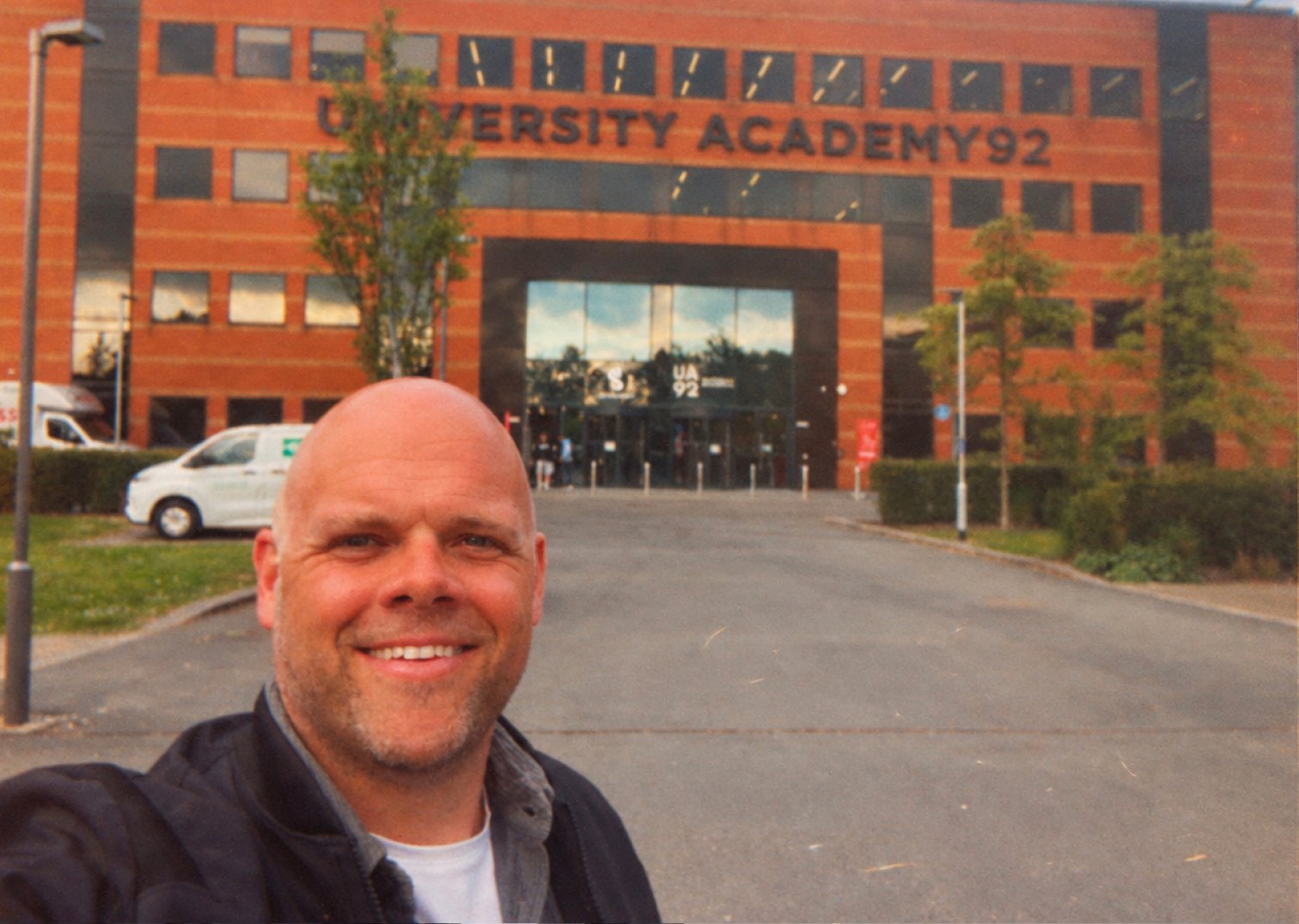
Over the last two years, I’ve upskilled myself in negotiation, leadership and building culture. I worked with a university to develop a leadership course around personal leadership, team leadership, conflict management and cross-cultural communication.
And there was the family side. My kids are six and nine now. I believe this is the time when I can help set them up for life. Once they’re twelve, thirteen, fourteen, their friends become the people they want to spend time with. Before that, you have a window of opportunity to give them skills for life. And that’s what I chose to do in 2024.
And over those two years, nothing but good things came my way. I started meeting people I probably wouldn’t have had time to really connect with when I was in professional football. In pro football, there’s never really time to connect with people. It’s all about the business. And I’m a people’s person—I like to connect and take my time. That was something I needed more of.
For people who want to follow your work and see what you’re doing in this next chapter, what’s the best way to do that?
JP: Right now, it’s LinkedIn. That already takes up quite a chunk of my week. But I’m also in the process of writing a book, believe it or not. I have all these little notebooks everywhere.
When I left Brugge, I was like, “Okay, now what?” So I called one of my mates in Ireland and asked him, “Who’s someone I need to speak to that you find inspiring, but I don’t know yet?” He connected me to someone. I had an hour-long meeting with that person, and at the end he said, “JP, you should talk to this person.” So I did. Then that person referred me to someone else, and I just kept doing that.
As of today, I’ve had well over 200 of these meetings, and I’ve written down the life lessons from these people. The plan now is to write 11 lessons, or 11 chapters, about failing forward. And I only want to create eleven copies.
I’ll give those eleven copies to eleven people who inspire me and help me along the way. I’ll ask them to read one chapter per day. At the end of day eleven, they’ll write their own eleven lessons at the end of the book and pass it on to someone they want to read it. Then that person passes it on again. Eleven times eleven.
Hopefully, the eleventh person sends it back to me. Then I’ll create one masterpiece from all those lessons I’ve been given in return, together with the draft I created myself. I’m on chapter three now, and it’s painstakingly hard. I’m backspacing all the time: “No, this word doesn’t match what I want to say.”
I have a lot of respect for writers because I do not consider myself a writer at all. I’m just jotting down a few words and hoping it makes sense. But it’s out of my comfort zone, and it’s very energizing to go through a phase like that. So LinkedIn it is—and hopefully, later in life, a book one day.