“I help explain the why”
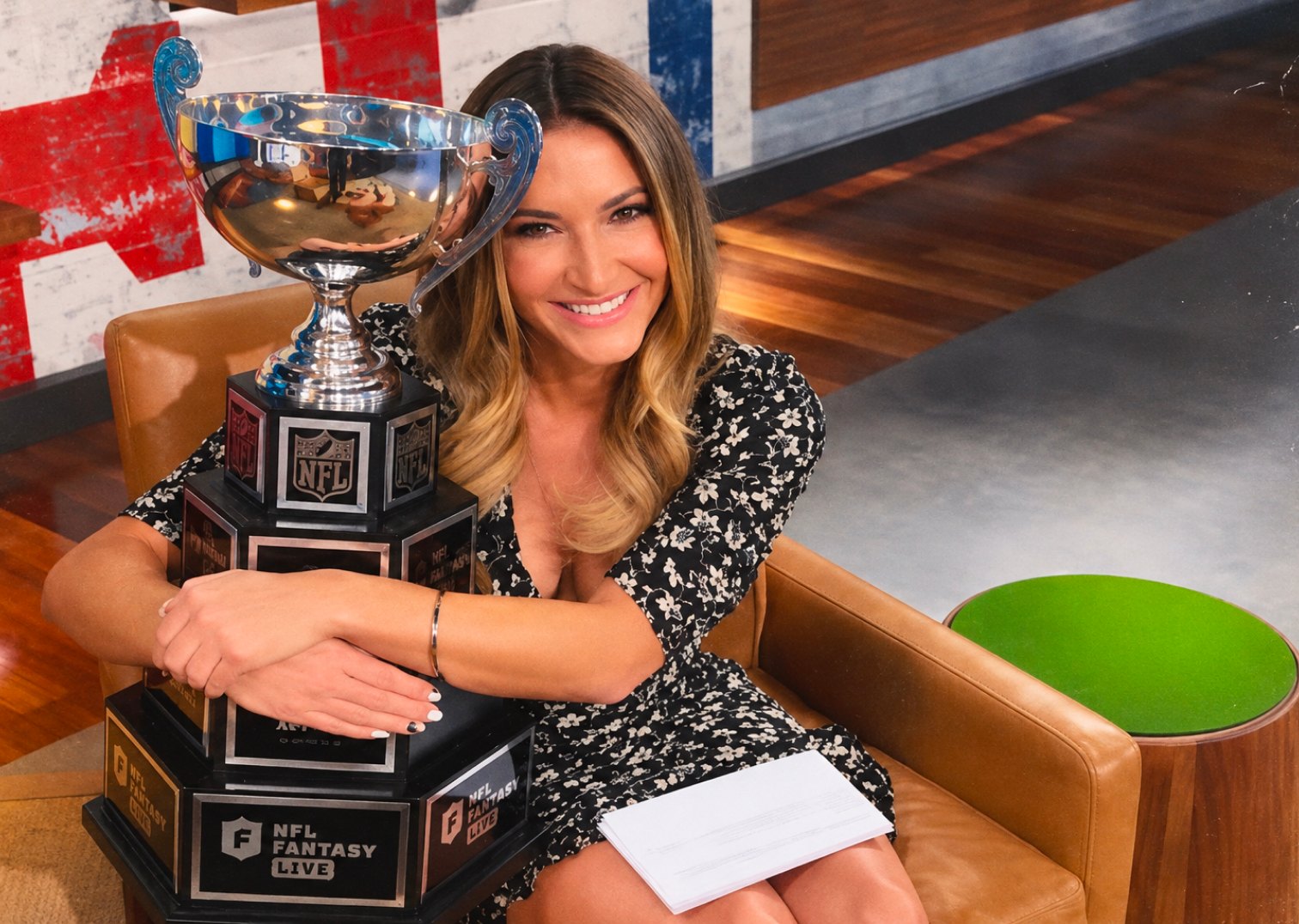
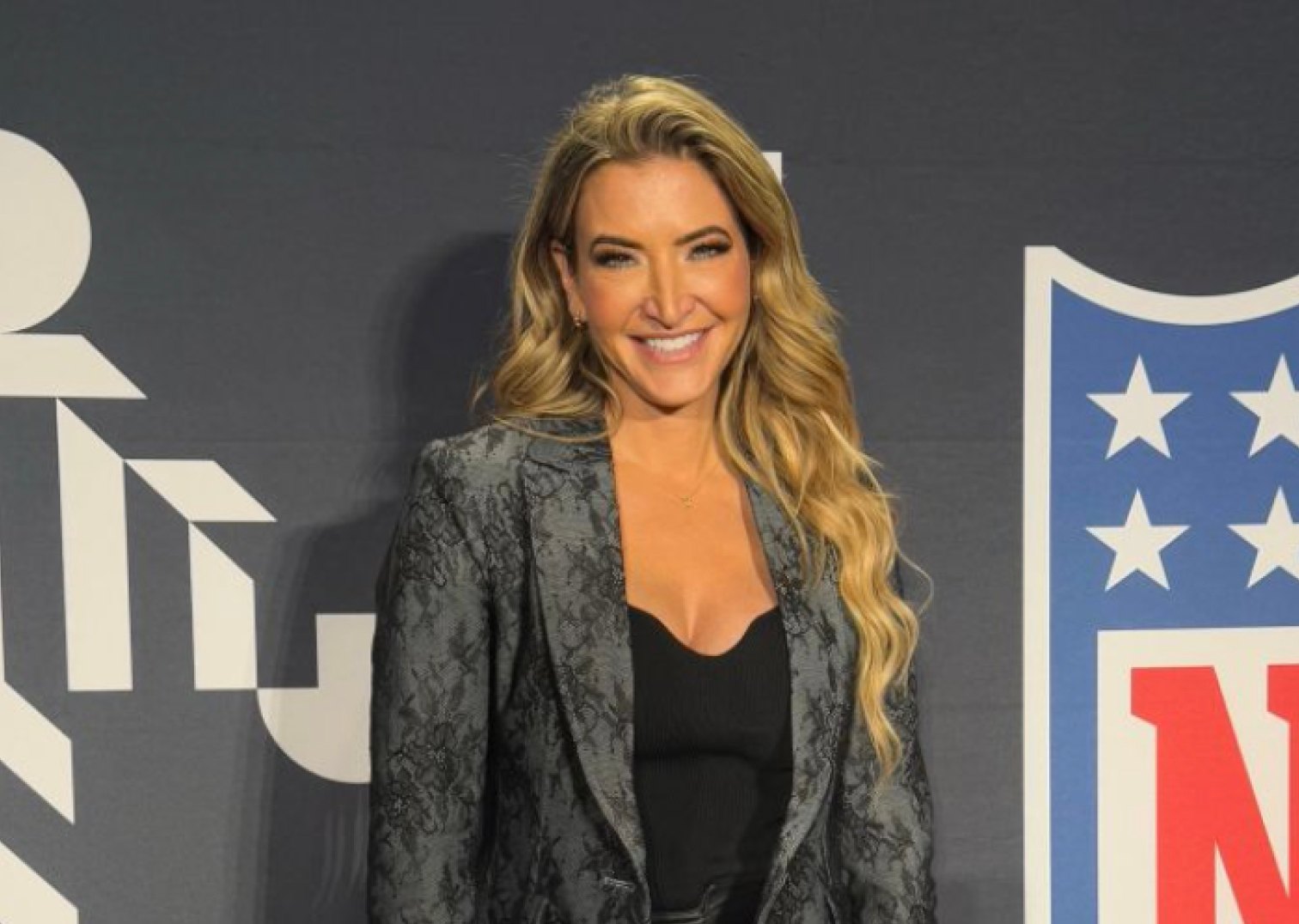
Cynthia Frelund is one of the best-known faces of NFL analytics. As an NFL analytics expert, she builds predictive models that simulate games to forecast outcomes, player performance and trends. Before entering the world of football, Cynthia studied biology, dropped out of medical school, worked in finance, earned an MBA and a master’s degree in predictive analytics.

Today she combines all of those experiences to explain one of the world’s most complex sports through data. In this interview, Cynthia talks about building predictive models, balancing analytics with intuition, and where football data is heading next.
You weren’t trained to become an NFL analyst. In fact, you originally planned to become a doctor. How did that journey lead you to sports analytics?
Cynthia: When you’re ten years old and say, “I want to go to medical school,” you kind of have to follow through. And then sometimes you have to drop out because you decide you want to become a data scientist instead. They don’t give you the money back if you leave medical school, just so we’re clear.
I’ve always loved math and science. My undergraduate degree is in biology, and my dad is an engineer, so physics and problem-solving were a big part of how I grew up.
After leaving medical school, I took a few unexpected turns. I worked in finance, earned an MBA and later a master’s degree in predictive analytics. Eventually I realized I could combine sports with the kind of deep analytical work I’d been doing in banking.
To me, those worlds aren’t actually that different. A doctor uses data to understand what’s happening inside the human body. I use data to understand what’s happening inside a football game. In both cases, you’re trying to answer the same question: why did this happen?
What’s your favorite way to explain what you do—to, say, a five-year-old?
Cynthia: I usually say that I help people understand why.
Why did something happen in a game? Why is one team more likely to win than another? What’s the highest-probability outcome?
In football, there are twenty-two players moving at the same time, plus special teams. It’s an incredibly complex game, so my job is to understand what the most likely outcome is—and then ask what the underdog can do to change it. I like looking under the hood to understand what makes something high probability or low probability, and what strategies can shift those odds.
You often call your model a “mousetrap” that you’ve built yourself. What’s the most common thing that goes wrong?
Cynthia: That’s a great question! The biggest limitation is injuries. You can never truly predict an injury, and even when you know a player is injured, it’s hard to predict how a team will respond.
Take a quarterback, for example. If Patrick Mahomes is replaced, you’re not just replacing a player—you’re replacing an entire style of football. Mahomes creates plays off-platform and improvises. Another quarterback might stay in the pocket and play a completely different game.
The model can account for a change in personnel, but it’s much harder to account for a change in strategy. That’s probably where it struggles the most.
What happens when your football instinct tells you one thing, but your model says another? Which one wins?
Cynthia: The good thing is that I get to talk about it on TV. I can say, “My instinct tells me this is crazy, but the model says something completely different.” That’s actually one of the reasons I built the model myself. Over the years, the technology has changed dramatically, but because I built it, I always know how to trace the output back to its source.
Sometimes my gut says one thing, while the model points in another direction because of three specific factors. That creates a really interesting conversation. You’d think my intuition would always be reflected in the model because I’m the one who built it.
Absolutely not! My job is to present what the model says. From there, we can have a discussion based on what the science says.
You famously got your start at the NFL with a cold email. Tell us that story.
Cynthia: When I was in business school, I was working in finance and reading research reports all the time. One of my favorite analysts was Anthony Noto at Goldman Sachs. Then I found out he’d become the CFO of the NFL.
I loved the way he thought. He had this incredible ability to take complex information and distill it into something simple.
I remember thinking, “It would be really cool to work for him.” So I sent him a cold email.
At the time, I had no idea what I was doing. I didn’t really understand the risks of leaving banking for the NFL. Looking back, maybe there are no mistakes—just different paths. That decision ultimately led me to everything I’m doing today.
And he’s actually the kind of person who answers cold emails?
Cynthia: He is! To this day, Anthony remains one of my biggest mentors. He’s someone I still turn to when I need advice. Everyone needs a person who helps keep them grounded, and that’s been him for me. I feel incredibly lucky that he answered that email—and that we’ve stayed in touch ever since.
Football is becoming more and more data-driven every year, but not every department uses data in the same way. Where do you think teams still rely more on intuition than analytics?
Cynthia: I think it really depends on the team. If we focus on the football side rather than the business side, I’d say there are three main areas where data is used.
The first is health and performance science. This ranges from league-wide initiatives—like changing kickoff rules or improving helmet design to reduce injuries—to team-specific work around sleep, travel, recovery and training load. Some teams monitor players with wearable trackers to better understand workload and help manage performance throughout the season.
The second is on-field tracking. Through the NFL’s Next Gen Stats system, players, the ball and even the pylons are equipped with RFID trackers that generate detailed positional data throughout every game. We’ve gone from simply measuring speed to building a much richer understanding of what happens on the field.
The third is coaching and scouting. Teams use data to prepare game plans, identify opponent tendencies, support scouting, evaluate free agents and even inform contract decisions.
So data really is everywhere. Looking at where teams hire analysts is often the best way to understand where they’re making their biggest investments.
With all the data available today, what do you still wish you could measure? If you had a magic wand, what would you want to know about the sport that we don’t know yet?
Cynthia: That’s a question I think about a lot.
I’ve been building models since 2008, and over time I’ve become more interested in the interaction between data and people. Analytics can never fully capture the human side of performance, but I think we can do much more to help people learn and prepare.
We all learn differently. Some people learn visually, others through repetition or different kinds of feedback.
I’d love to understand how data could help personalize that process—how it could tell us not just what to train, but how someone learns best.
I even think about it in my own life. I’m a runner, and when I trained for a marathon I took running lessons. To this day, I’m still not sure I’m firing my hamstring correctly. Maybe I need pictures. Maybe I need a different kind of instruction.
I’d love to see data help people learn, not just measure how they perform.
Every week you put numbers on uncertainty in front of millions of viewers. How do you get comfortable with that?
Cynthia: I think there are a couple of reasons.
First, I’ve done the work. Viewers shouldn’t have to earn all the degrees I earned to understand the game—that’s my job. I have to take something complicated and explain it clearly, and television teaches you to do exactly that. You have thirty seconds to make your point.
I’m also comfortable being wrong. My company is called Pretty Good Data for a reason. I’m not chasing perfect data. I don’t even need optimal data. I just need data that’s good enough to help us make better decisions.
There’s so much information available now that interpreting it is part science and part art. My responsibility is to explain my reasoning. People can agree or disagree with it, but they’ll know how I got there.
I work hard to improve the model all the time. I ask coaches for feedback, I stay in touch with my professors, I keep questioning my own work. You don’t have to be right 100 percent of the time. If you can help people make decisions that are ten percent better, you’ve done something valuable.
I’m completely fine being wrong. I just want to be wrong because football surprised us—not because I didn’t do the work.
Being able to admit when you’re wrong seems especially important when your job involves predictions…
Cynthia: Totally. That’s the funny part about TV. I have to say, “I think the Texans are going to beat the Titans by eight,” or whatever the model says. And then if the Titans win, I have to say, “Yeah, I get it. I’m not always right.”
But this is what the math says. This is the foundation. I’m totally fine with that. I want to be an open book and transparent about it. If it’s wrong, it’s wrong. Make it better next time.
Let’s try to put some numbers to the uncertainty together. Five years from now, what do you think will be different about football—and what will stay the same?
Cynthia: The thing that will stay the same is the competitive spirit.
One of the things the NFL has done exceptionally well is preserve competitive balance. We only play seventeen regular-season games, so every game matters. The schedule, the draft and the league structure are all designed to keep as many teams competitive as possible for as long as possible. I don’t think that’s going to change.
I also think we’ll continue to see rule changes that improve player health without changing the essence of the game. You want your best players on the field, so anything that helps reduce injuries while preserving competition is a good thing. Where I expect the biggest change is in data.
Right now we’re still focused on collecting more information. Over the next five years, I think the real advantage will come from interpreting that information. The teams that build the best infrastructure and communicate insights most effectively across scouting, coaching and performance departments will gain the biggest edge.
The data is becoming more complex every year. The challenge won’t be collecting it—it will be making sense of it.
Then we’ll have to do another episode five years from now and see which of these predictions came true.
Cynthia: Sounds good!