
AI in football: from tracking to biomechanics

Football is the world’s most watched sport. FIFA says around 5 billion people engaged with the 2022 World Cup in Qatar, and the final alone reached almost 1.5 billion. It is also a huge business, and one of the busiest testing grounds for computer vision and artificial intelligence. This article looks at what the technology actually does in football in 2026: tracking players, supporting tactics, helping referees and, increasingly, measuring how players move.
Tracking every player
The foundation is optical tracking: cameras around the stadium follow every player and the ball many times a second. Several companies supply it, and they differ by league. In the Premier League, Hawk-Eye has provided goal-line technology since 2013 and Genius Sports runs the semi-automated offside system; the Bundesliga works with TRACAB. Hawk-Eye alone says its football systems run in more than 400 stadiums in 95+ countries, covering 45,000+ matches a year.
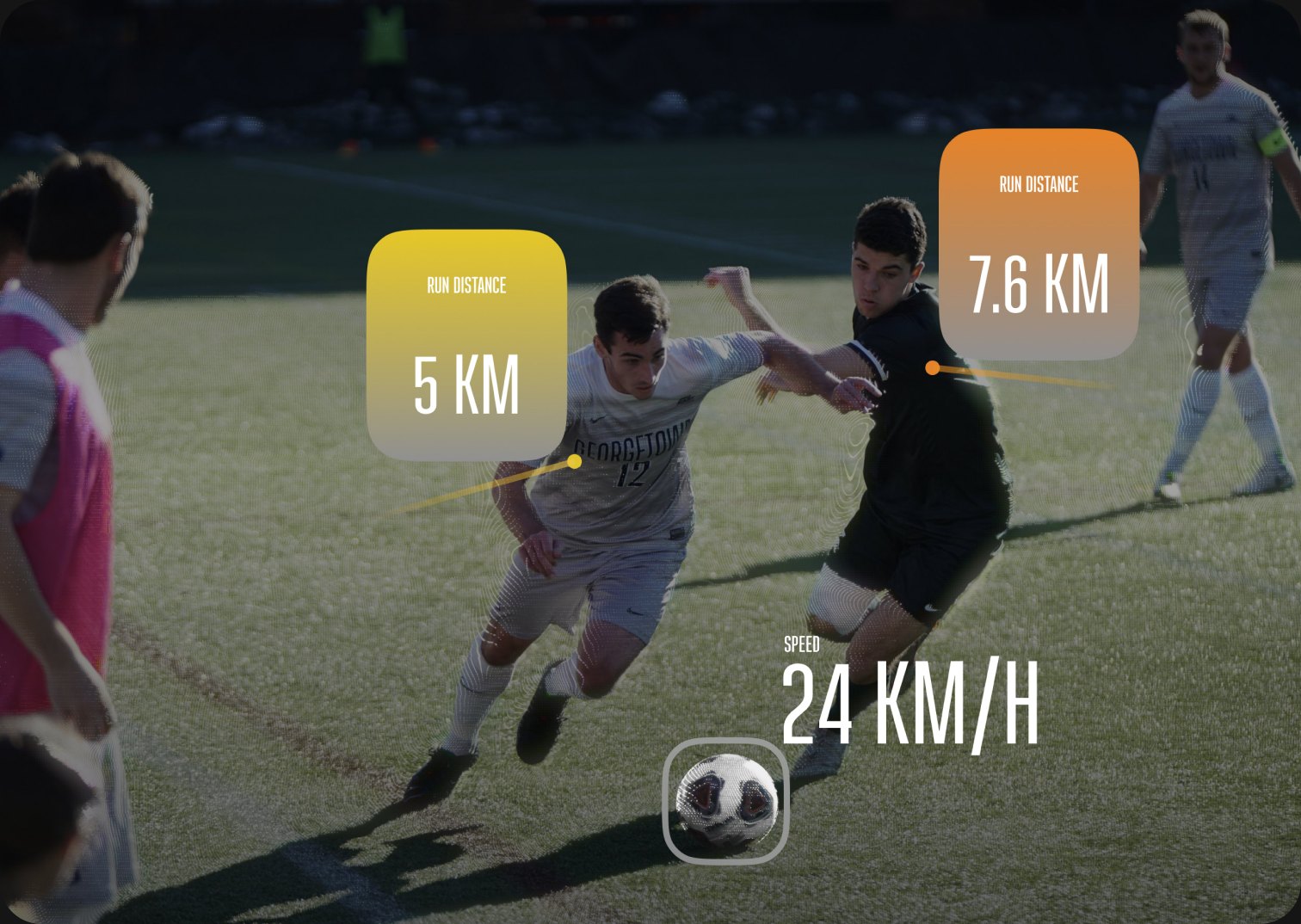
Players are identified by combining what the cameras see, such as team colours and shirt numbers, with context such as the team sheet and each player’s position on the pitch.
Tracking has also moved from dots to bodies. Early systems gave each player a single point on a 2D pitch map. Today’s systems model the whole body: the Bundesliga introduced 3D skeletal tracking in the 2025/26 season, and the Premier League’s offside system uses up to 30 cameras per stadium to build a detailed 3D model of every player.
What the data shows
With every player tracked through a match, clubs can measure:
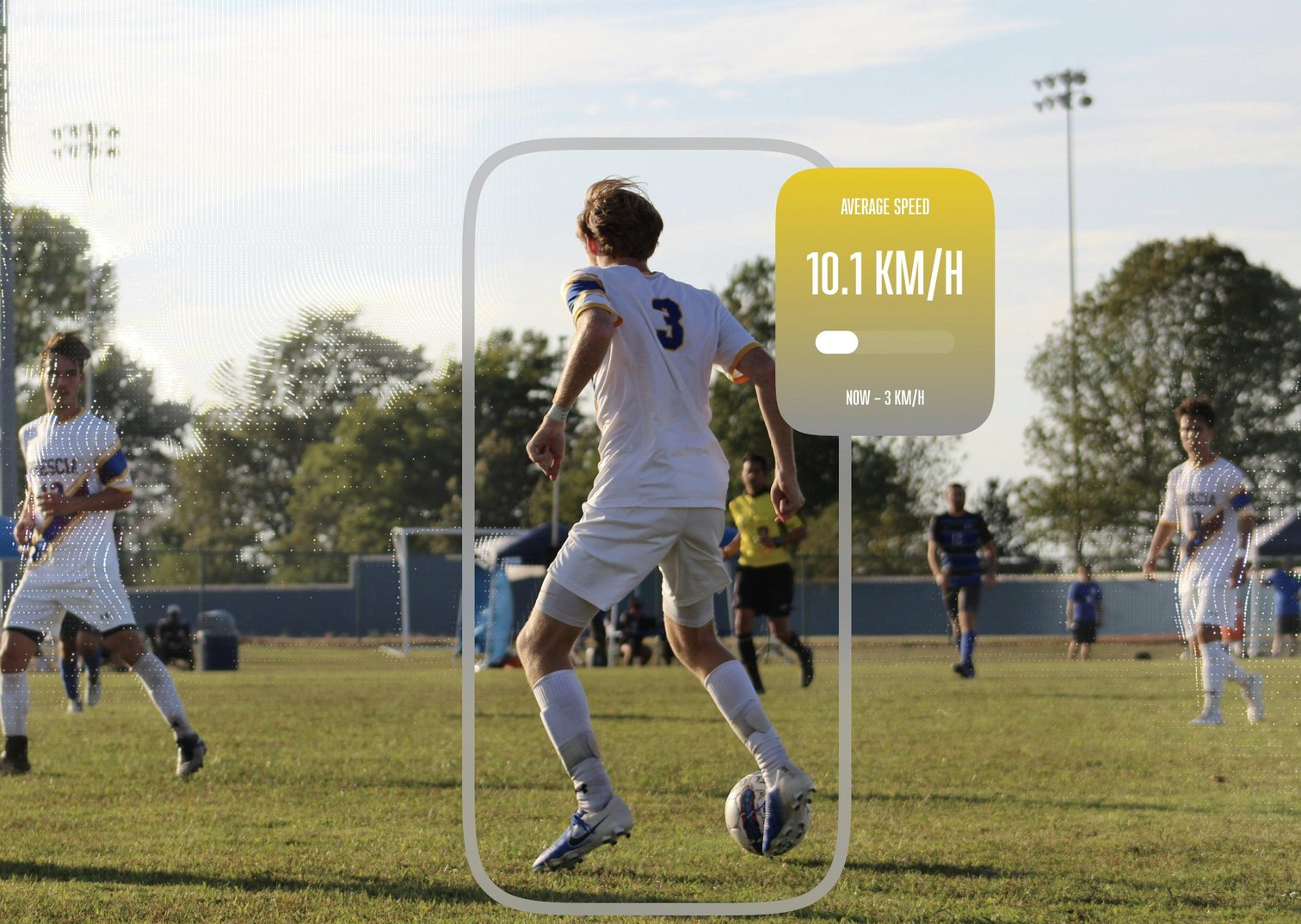
- running speed and acceleration, peak and average;
- total distance and high-speed running;
- sprints: how many, how long and at what speed;
- positions and movement patterns on the pitch;
- passing options and pressure around the ball.
This data has also documented how the game itself is changing. A study of ten Premier League seasons found that sprint distance per team rose by 40% between 2015/16 and 2024/25. Matches are faster and more intense than a decade ago, and the demands on players have grown with them.
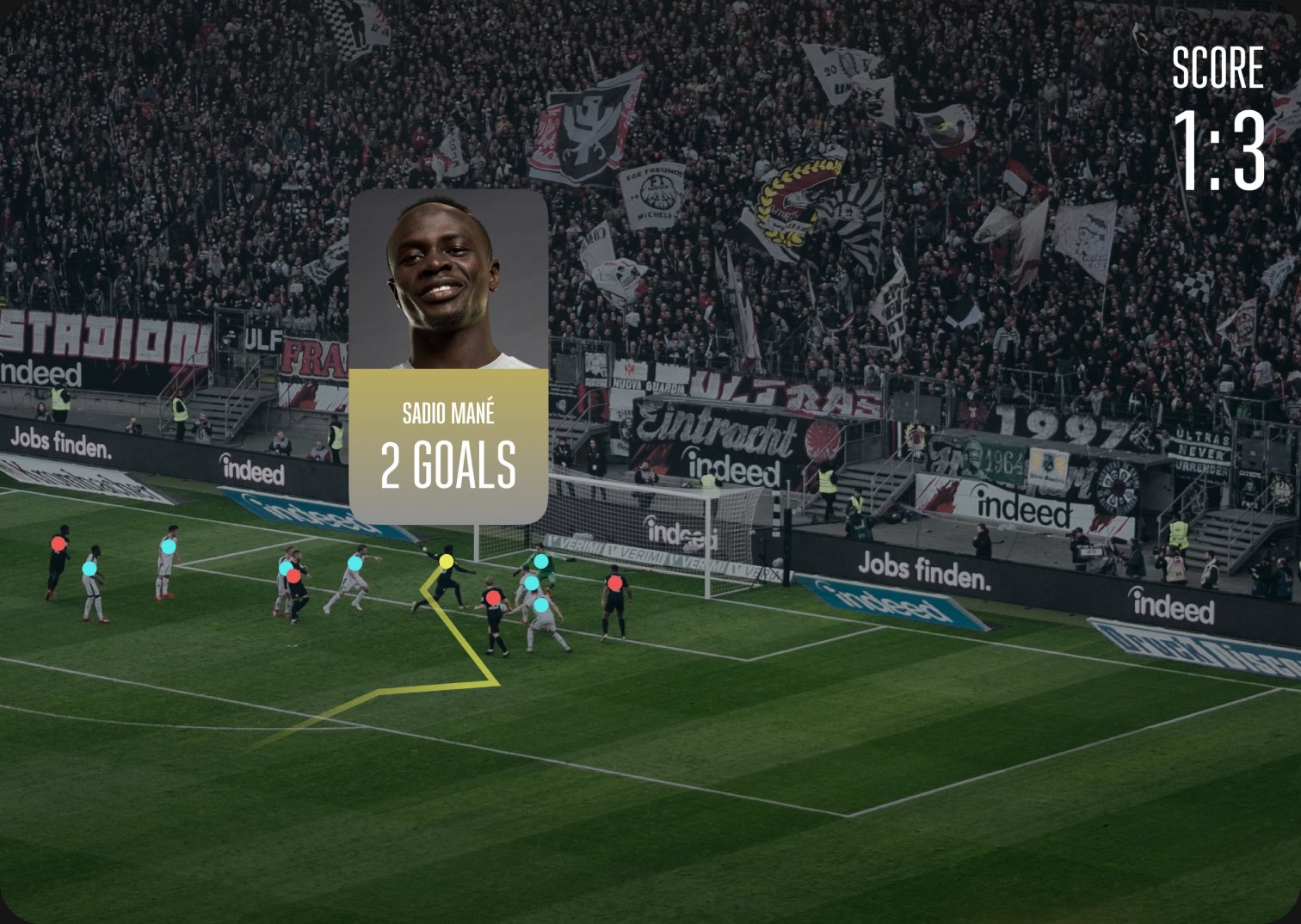
Tactics
AI is starting to help with tactical questions too. The best-known example is TacticAI, a research project by Google DeepMind and Liverpool FC published in Nature Communications in 2024. Trained on 7,176 Premier League corner kicks, it predicts which player is likely to receive the ball and whether a shot will follow, and suggests how to reposition players. In a blind test, Liverpool’s experts preferred its suggestions to the real setups 90% of the time.
Tools like this do not replace coaches. They help staff review far more situations than anyone could watch by hand, and bring evidence to decisions that used to rest on intuition alone.
Refereeing
Refereeing is where computer vision has changed football most visibly. Offside is hard to judge by eye: a study of the 2002 World Cup found that 26% of offside decisions were wrong.
Technology arrived in steps. Goal-line technology came first: at the 2014 World Cup, the GoalControl system used 14 cameras per stadium to confirm whether the ball crossed the line. The Video Assistant Referee (VAR), a team of officials reviewing video of key incidents, followed. Then came semi-automated offside technology. At the 2022 World Cup in Qatar, 12 roof cameras tracked 29 points on each player’s body, and a sensor inside the Al Rihla match ball reported its position 500 times a second.
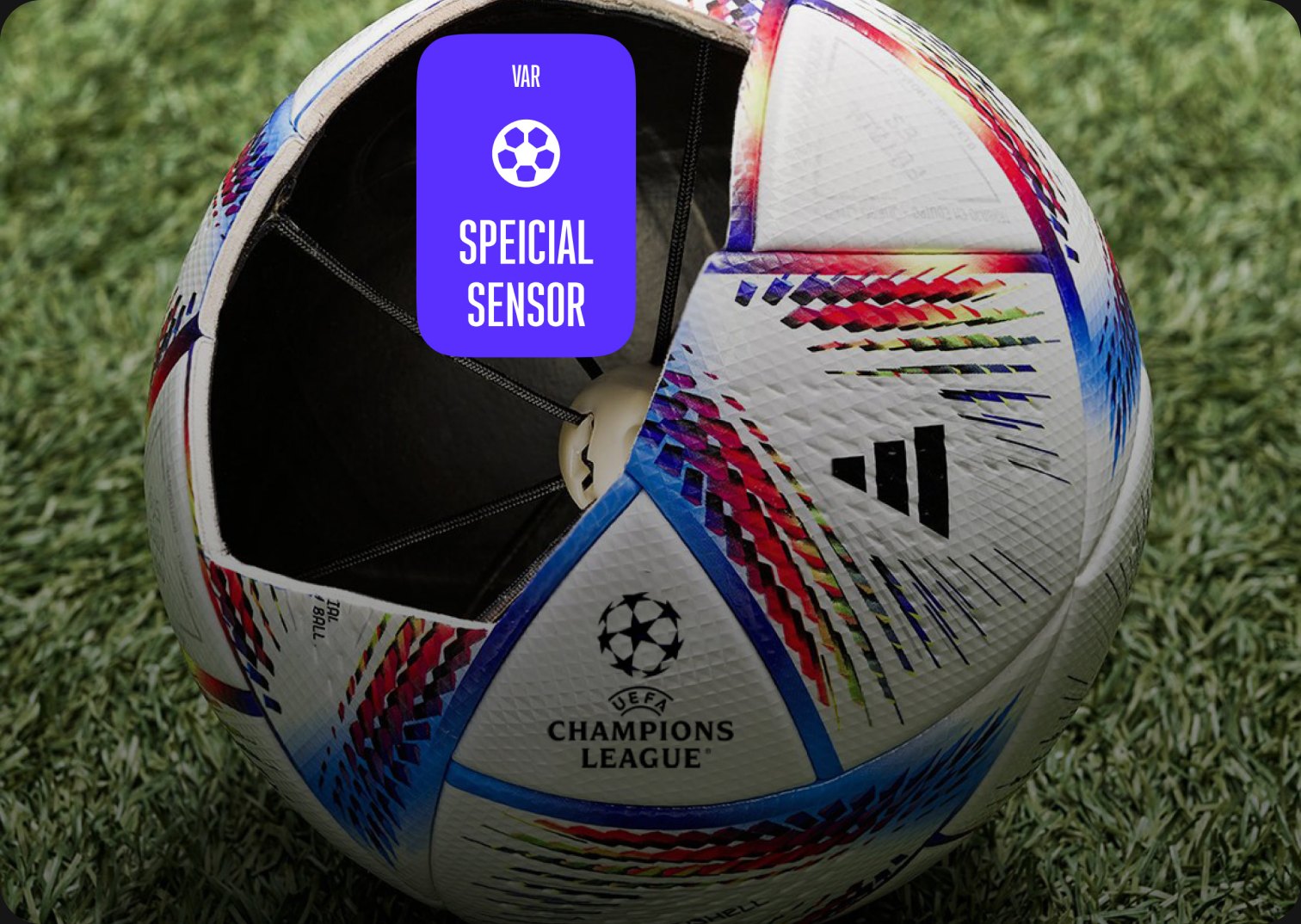
Semi-automated offside is now standard at the top of the game: in the Champions League since 2022/23, Serie A since January 2023, LaLiga since 2024/25, the Premier League since April 2025 and the Bundesliga since 2025/26. At the 2026 World Cup, FIFA used an upgraded system with 16 cameras per stadium and 3D-scanned models of every player, and referees wore body cameras. In every case, the system proposes and officials confirm: the final decision stays with people.
From tracking to biomechanics
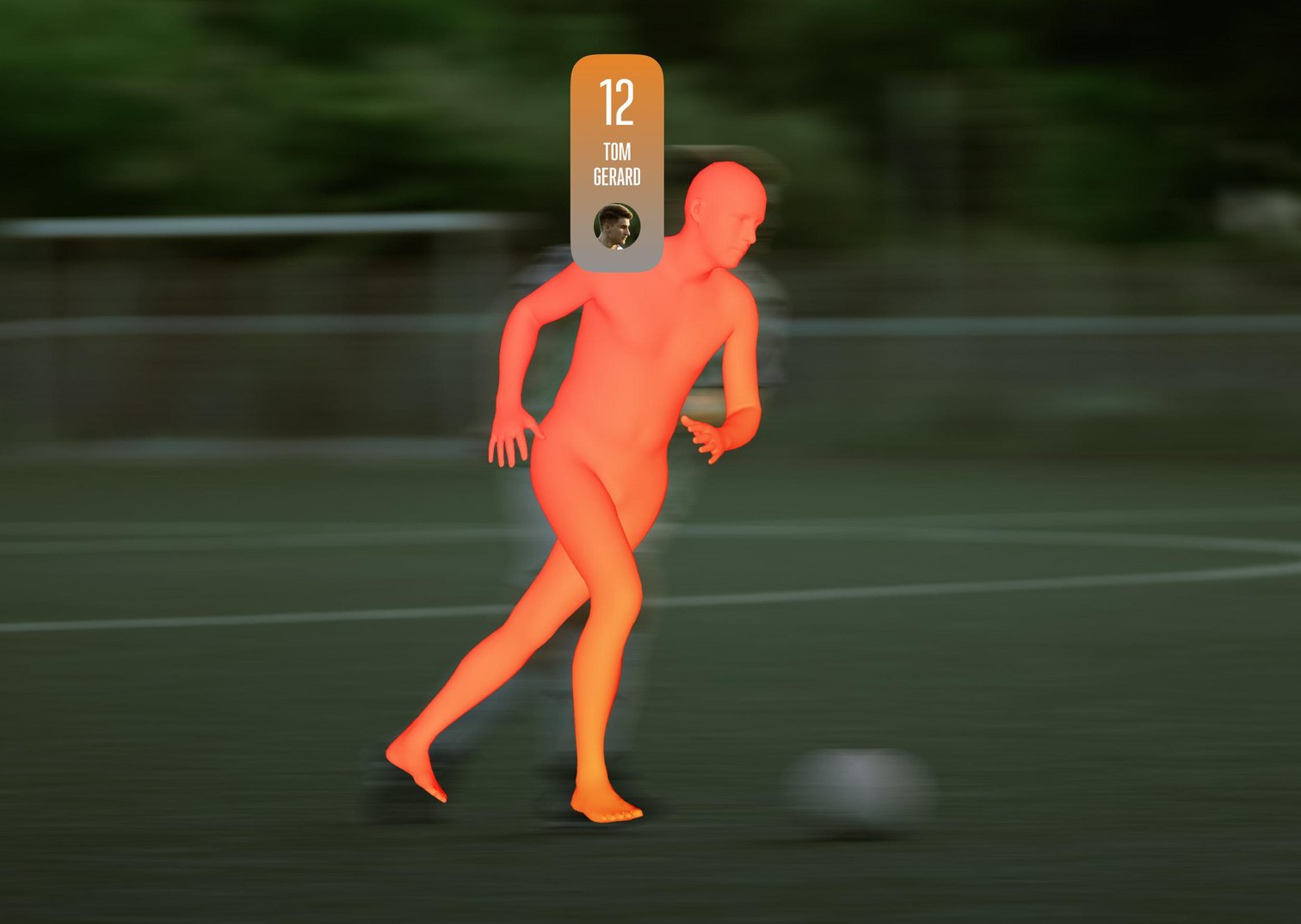
Tracking answers where a player is and how fast they move. It does not answer how they move. That is the next step: turning the same video into a 3D model of each player’s body, and measuring joint angles, stride timing and asymmetry in every sprint.
This is the kind of analysis that used to require a motion-capture lab or wearable sensors. From broadcast and tactical footage it can be done for every player, in every match, without adding anything to the players’ routine. Compared with each athlete’s own healthy baseline, it shows performance and medical staff when and how someone’s running mechanics change.
Match viewing
The same technology changes what fans see. Broadcasts add live speed and distance graphics, and 3D reconstructions of key moments let viewers see an incident from angles no camera filmed. Offside decisions are now shown as 3D animations built from the tracking data, so fans can see why a goal was ruled out.
Football has always been a game of opinions. Computer vision does not end the arguments, but it gives everyone, from referees to coaches to fans, more of the evidence.