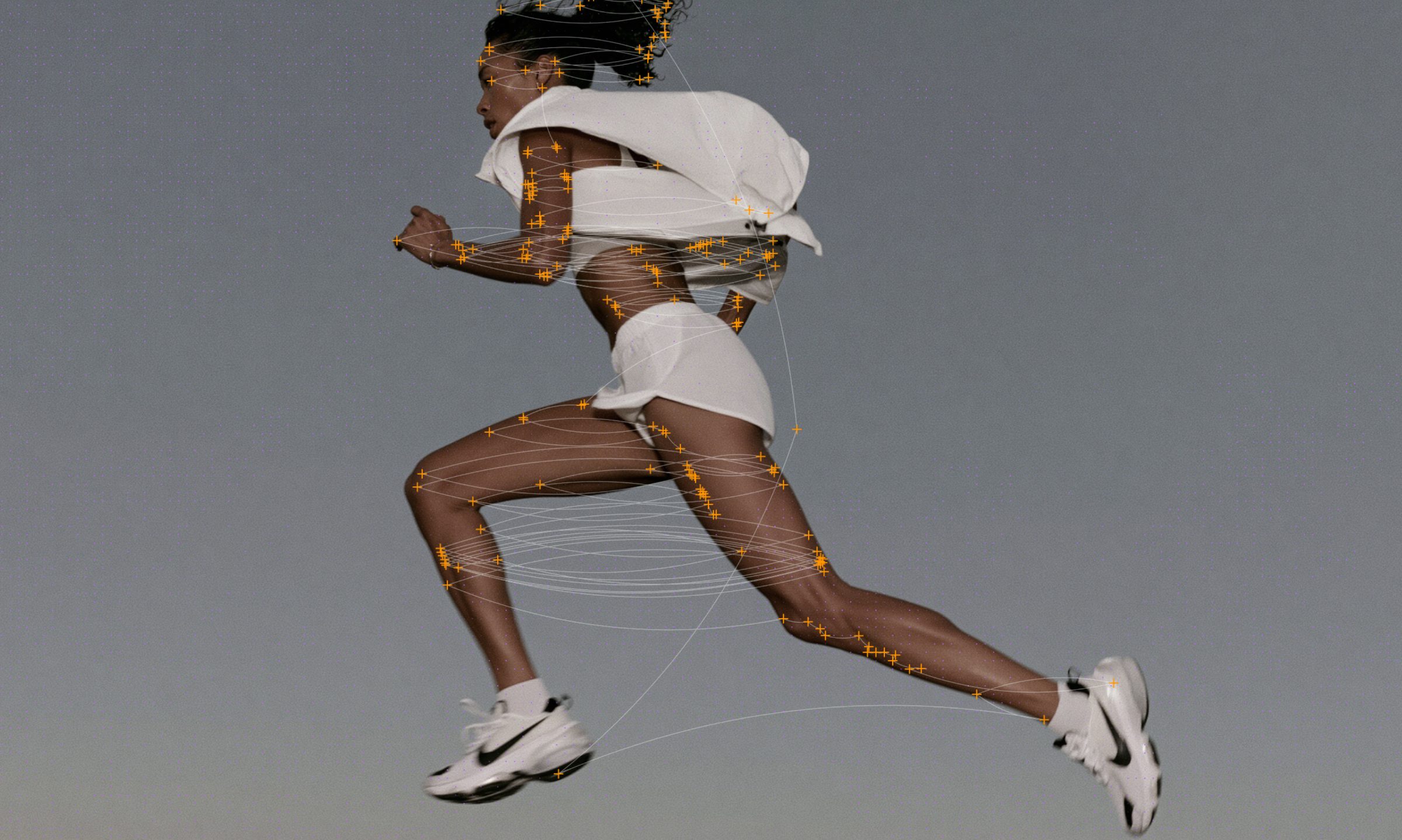
Pose tracking: from fitness apps to elite sport

Pose tracking reached most people through fitness apps: a phone camera counts squats, checks a plank or nudges a yoga pose. The same technology, pushed much further, now measures how elite athletes move in matches and training. This article explains what pose tracking is, how the main body models differ, and what changes when the goal is not a home workout but a sprint in a professional football match.
What pose tracking is
Pose tracking, also called human pose estimation, is a computer vision technique that finds a person in an image and estimates the position of their body: joints such as hips, knees, ankles and shoulders, and in more advanced systems the full shape of the body.
Once the body is located frame by frame, its movement can be measured: joint angles, the timing of each step, speed, and how one side of the body compares with the other.
The three types of human body models
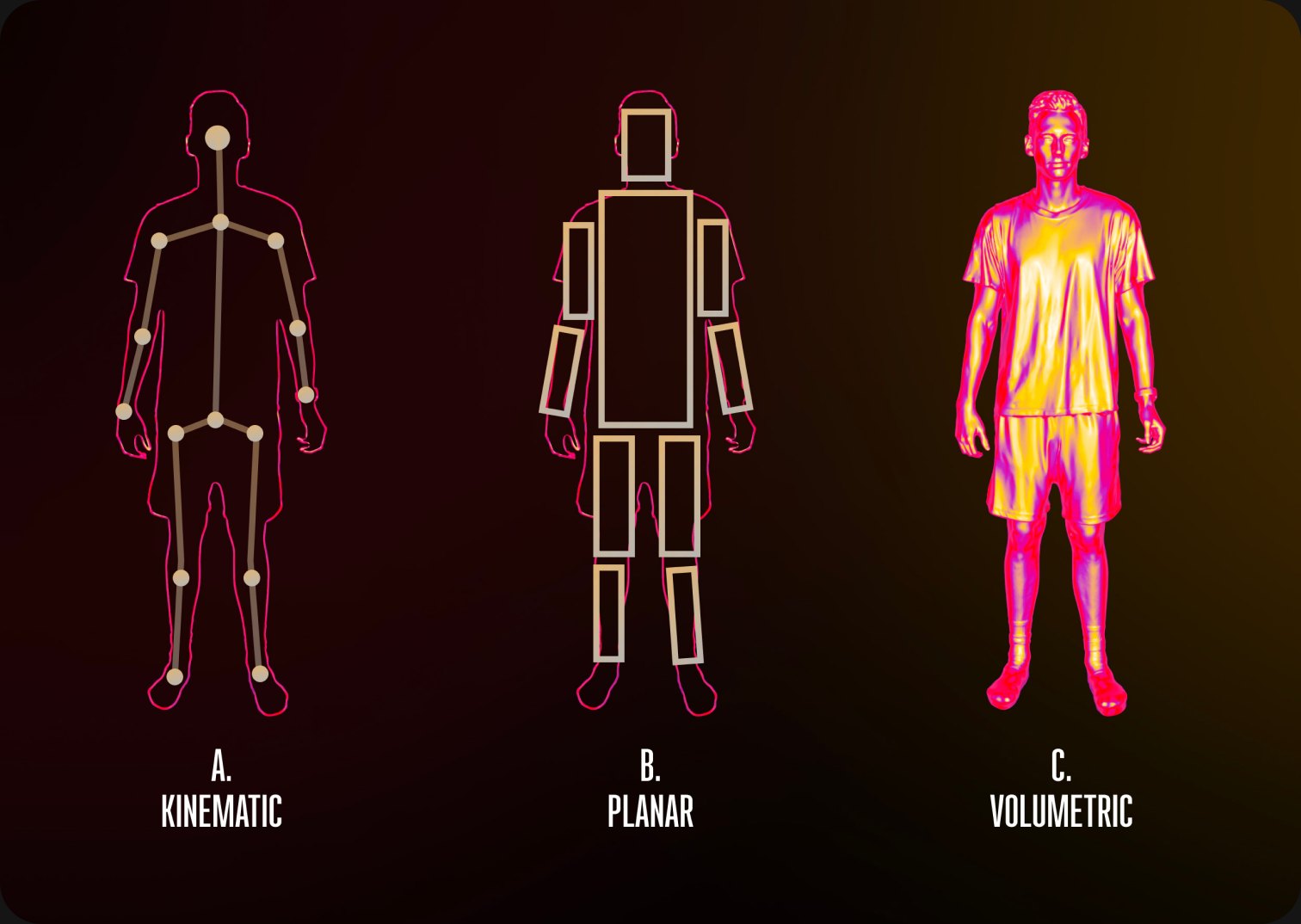
There are three main ways to model the human body in pose tracking: skeleton-based, contour-based, and volume-based.
Skeleton-based model. A set of joints, or keypoints, connected like a stick figure. It works in 2D and 3D and is fast to compute, but it records only where the joints are, not the shape of the body around them.
Contour-based model. Body parts are represented by the outline and rough width of the silhouette. It gives a visual outline but little information about depth and volume, so it is rarely used for precise measurement.
Volume-based model. A 3D mesh of the whole body, made of thousands of vertices, fitted to the person in the image. Because it represents the body's full shape and its orientation in space, it gives the most complete basis for measuring movement.
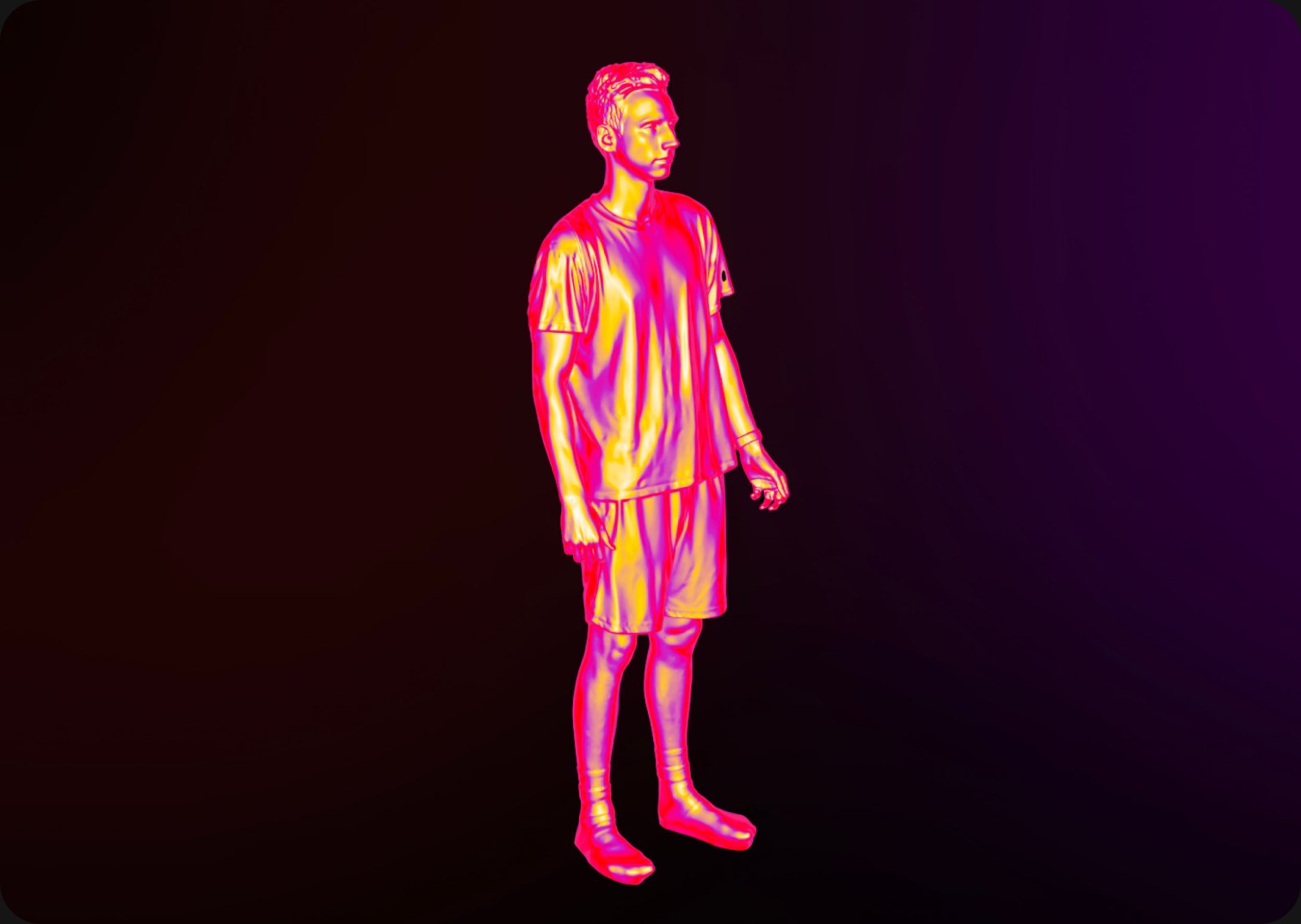
Working in 3D matters for sport. An angle measured on a 2D image changes with the camera's viewpoint: the same knee bend looks different from the side and from behind. A 3D body gives angles relative to the body itself, so a trunk lean or a shin angle means the same thing whichever camera filmed it.
From fitness apps to elite sport
Consumer fitness apps showed what pose tracking can do: count repetitions, check form and give feedback in real time, with a phone propped on the floor a couple of metres away.
Elite sport asks for something different. Practitioners do not need a rep counter; they need to know whether an athlete's movement has changed, by how much and where. The conditions are also much harder:
- Distance and resolution. In a match broadcast or a tactical camera, a player may be a small figure on the far side of the pitch, not a person filling the frame.
- Speed. A sprinting footballer can exceed 30 km/h, and the key moments of a stride, such as touchdown and toe-off, last only a few hundredths of a second.
- Occlusion. Players pass behind each other, the referee and the ball.
- Camera geometry. Broadcast cameras pan and zoom, so the pitch itself has to be used to place the athlete in real-world coordinates.
- No setup. Clubs cannot ask players to wear markers or suits in a match, and elite teams need measurements from the footage they already record.
What 3D pose tracking gives practitioners
When these problems are solved, the same footage a club already has becomes a source of biomechanics:
- Every sprint, measured. Each high-speed effort is found automatically, and each stride is split into phases such as toe-off, late swing, touchdown and mid-stance.
- Joint angles and asymmetry. Trunk lean, thigh separation, shin angle and dozens of other measures, per stride and per side.
- Established assessments. Scores such as the Sprint Mechanics Assessment Score (S-MAS) can be computed on every stride instead of from a single filmed trial.
- Change over time. An athlete's recent games can be compared with their own healthy baseline, and with their pre-injury movement when they return to play.
These are measurements, not predictions. They show that an athlete's mechanics have changed and by how much; interpreting what that means for training, load or rehabilitation stays with qualified staff.
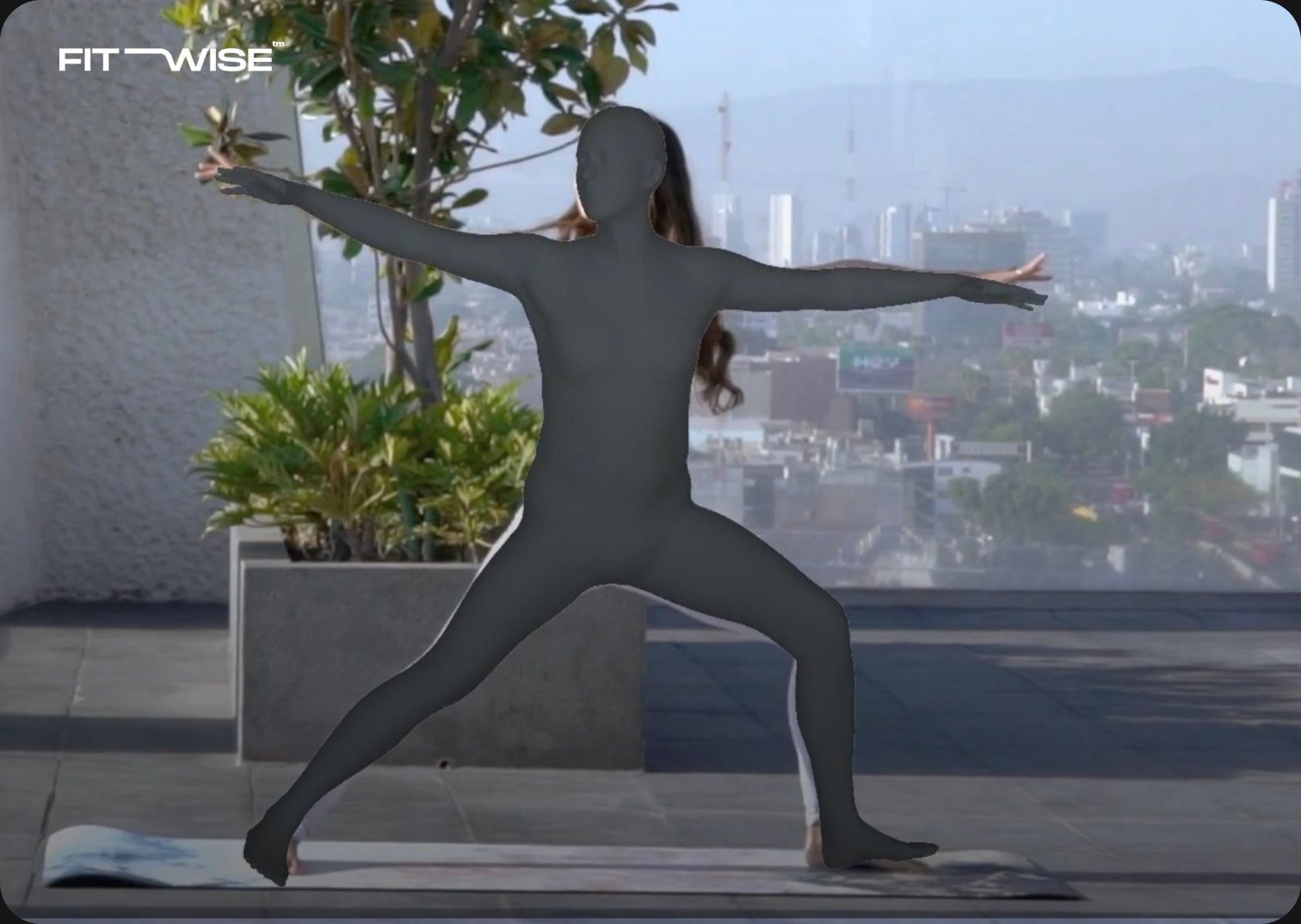
Challenges for precise pose tracking
Any analysis built on pose tracking is only as good as the pose itself. Three challenges stand out.
Accuracy has to be proven. A pose that looks right on screen can still be several centimetres off. The standard check is to compare video-based poses with a reference system, such as an inertial motion-capture suit or an optical marker lab, recorded at the same time on the same athletes.
Sport-specific data is scarce. General pose datasets are dominated by everyday poses. Sprinting, cutting and kicking produce ranges of motion and speeds that these datasets barely cover.
Precision versus speed. Real-time feedback needs fast models, while biomechanics needs precise ones. For match analysis, precision matters more: results are needed after the game, not within milliseconds.
Where this is going
Pose tracking started as a way to count squats in a living room. In elite sport it is becoming a way to measure every athlete's movement, in every game and training session, without sensors or wearables. The value lies less in any single measurement than in tracking how each athlete's movement changes over time, and in giving performance and medical staff objective evidence to support their decisions.